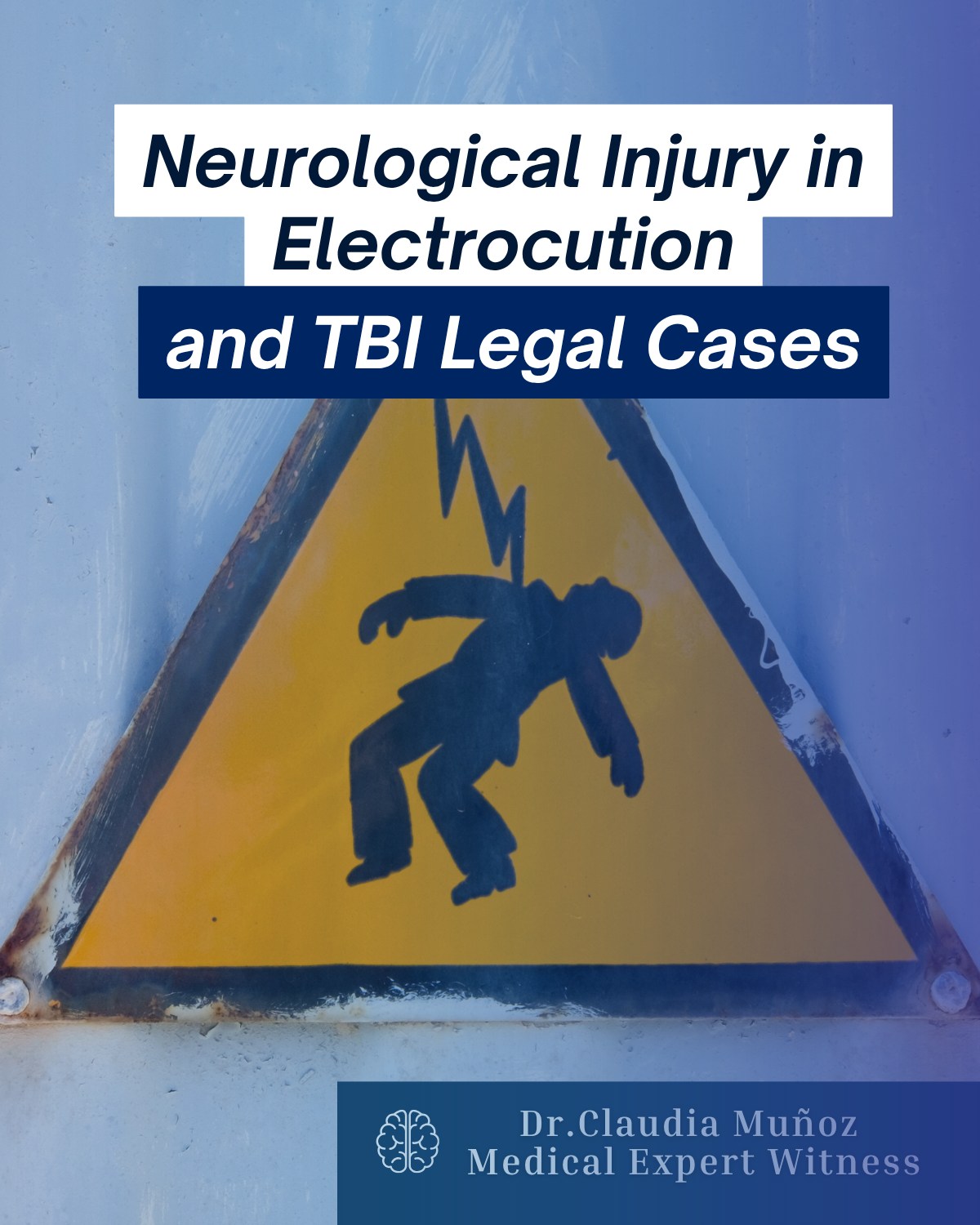
Neurological Injury in Electrocution and TBI Legal Cases
By Dr. Claudia Munoz, MD, MPH — Board-Certified Neurologist & Epileptologist, Medical Expert Witness
Electrocution cases frequently center on burns or cardiac effects, but the neurological injury involved is often the most significant — and most contested — part of the claim. Understanding how neurological injury actually presents in these cases is essential to evaluating them accurately.
Two Pathways to Neurological Injury
Electrocution can cause neurological injury through more than one mechanism, and cases often involve both:
Direct current effects. Current traveling through the body — even without passing through the head — can disrupt neuron function at a cellular level, affecting brain activity without any visible external trauma.
Secondary trauma. The muscle contraction, loss of balance, or brief loss of consciousness that can accompany a shock often leads to a fall or impact, producing a traditional, impact-based brain injury layered on top of the electrical one.
A thorough case evaluation needs to consider both pathways rather than assuming the injury came from only one.
Common Neurological Findings in These Cases
The neurological effects seen in electrocution and TBI cases often include:
Cognitive impairment — memory, attention, and processing speed
New-onset or worsening seizure activity
Chronic headaches
Mood and sleep disturbances
These findings frequently overlap with mild traumatic brain injury more broadly, which is part of why a neurologist's evaluation adds particular value in electrical injury cases.
Why Imaging and Timing Often Complicate These Cases
Two recurring issues shape how these cases are argued:
Normal imaging doesn't rule out injury. Much of the neurological damage from electrical current is functional rather than structural, occurring at a level standard imaging isn't designed to capture.
Delayed onset is common, not disqualifying. Symptoms can emerge weeks or months after the incident. This is a documented pattern in electrical injury, not evidence against causation — though it's frequently used that way by opposing counsel or insurers.
As always, causation in any individual case depends on the specific facts — voltage, current pathway, duration of contact, and the client's full clinical history. This article reflects general clinical patterns, not a determination for any specific case.
Work With a Medical Expert Witness
I provide independent medical examinations, medical record review, expert report writing, and deposition and trial testimony for plaintiff and defense attorneys handling electrocution and traumatic brain injury cases.
📩 doctor.claudia@gmail.com | info@drclaudiamunoz.com
Dr. Claudia Munoz, MD, MPH Neurologist | Epileptologist | Medical Expert Witness
#TraumaticBrainInjury #ElectricalInjury #Neurology #MedicalExpertWitness #ForensicNeurology #LitigationSupport #PersonalInjuryLaw
