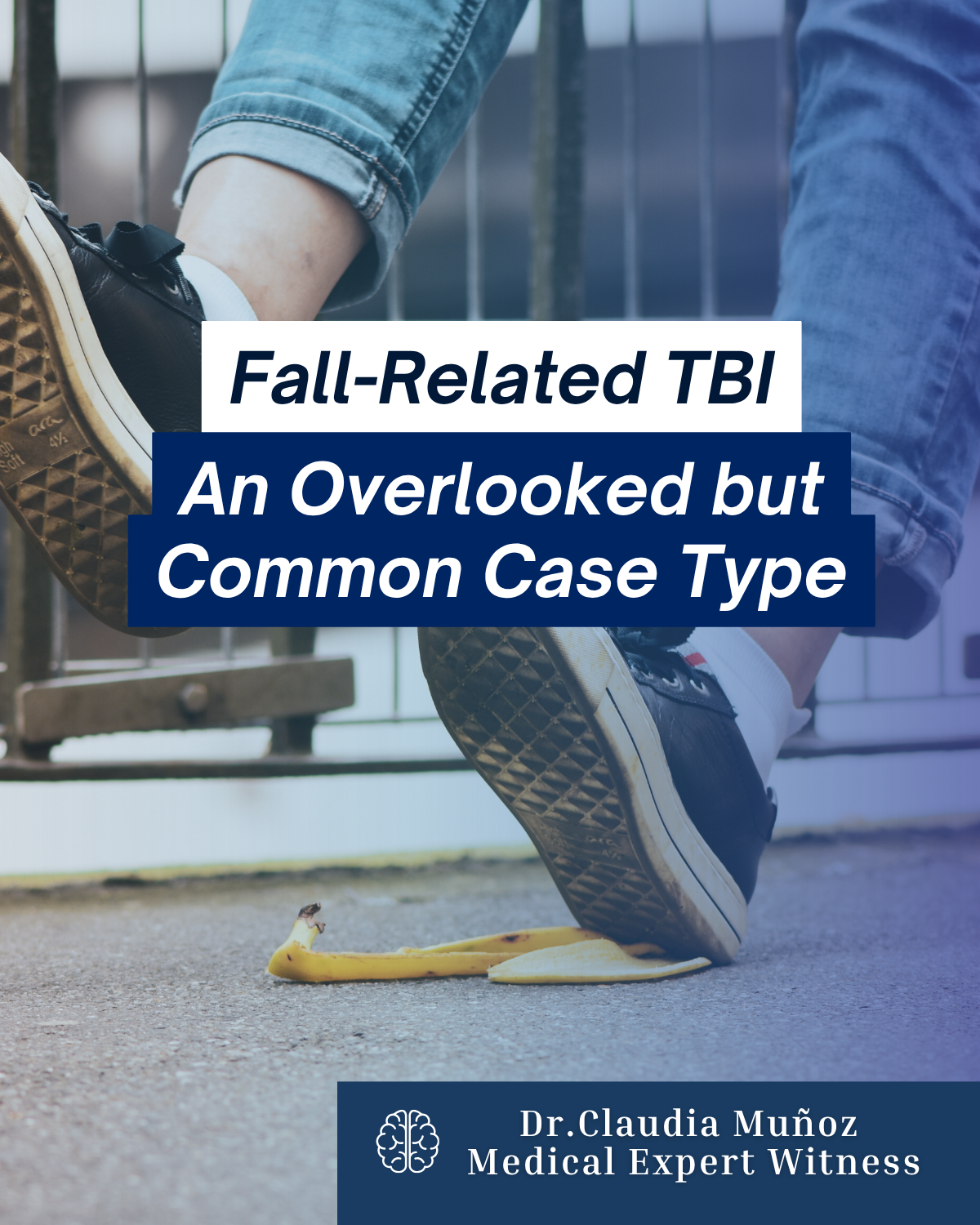
Fall-Related TBI: An Overlooked but Common Case Type
By Dr. Claudia Munoz, MD, MPH — Board-Certified Neurologist & Epileptologist, Medical Expert Witness
Falls are one of the leading causes of traumatic brain injury, yet fall-related TBI cases often don't receive the same scrutiny as car accidents or workplace injuries. Whether the fall occurred on unsafe premises, in a care facility, or as a secondary event during another incident, the neurological injury involved deserves the same level of careful evaluation.
Why Fall-Related TBI Is Easy to Underestimate
Falls are often treated as minor events, especially when there's no dramatic mechanism involved — a slip, a trip, a short fall from standing height. But a fall doesn't need to be from a significant height to cause a serious brain injury. Rapid deceleration when the head strikes a surface, even a low-impact one, can cause the same type of injury seen in higher-mechanism trauma.
This is particularly relevant in premises liability and elder care cases, where the fall itself may seem unremarkable, but the resulting neurological injury can be significant.
Age as a Critical Factor
Age plays a substantial role in both the risk and severity of fall-related TBI. Older adults are more vulnerable to brain injury from a fall for several reasons:
Age-related brain changes can make the brain more susceptible to injury from the same mechanical force
Common use of blood thinners increases the risk and severity of intracranial bleeding after a head impact
Pre-existing cognitive conditions can make it harder to distinguish new injury-related symptoms from baseline decline
This means the same fall that might cause minimal injury in a younger adult can result in a serious brain injury in an older adult — a distinction that matters both medically and in case evaluation.
Common Neurological Findings After a Fall
Depending on the mechanism and severity, fall-related TBI can present with:
Cognitive changes — confusion, memory difficulties, slowed processing
Headaches and dizziness
Balance and coordination problems
Seizures, particularly after more significant impacts
Behavioral or mood changes
In older adults, some of these symptoms can be mistakenly attributed to aging or an unrelated condition rather than the fall itself, which can delay diagnosis and complicate the causation analysis later on.
Why These Cases Get Challenged
"It was just a fall." Defense arguments often minimize the mechanism of injury, particularly for falls from standing height. This overlooks the fact that low-mechanism falls can still cause serious brain injury, especially in vulnerable populations.
Pre-existing conditions. In older adults especially, prior cognitive decline or unrelated health conditions are frequently used to argue that current symptoms aren't attributable to the fall.
Delayed recognition. Family members or caregivers may not recognize new cognitive or behavioral changes right away, particularly if they're subtle or attributed to normal aging.
What This Means for Case Evaluation
Mechanism severity isn't the same as injury severity. A low-impact fall can still cause significant brain injury depending on factors like head impact surface and patient-specific vulnerability.
Age and medical history need careful review. Especially in older adults, distinguishing new injury from baseline conditions requires a thorough neurological evaluation, not assumption.
Document the full symptom timeline. Clear documentation of when cognitive or behavioral changes appeared relative to the fall strengthens the causal connection.
As always, causation in any individual case depends on the specific facts and full clinical picture. This article outlines general patterns, not a determination for any specific case.
Work With a Medical Expert Witness
If you're handling a fall-related TBI case, a thorough neurological evaluation can help establish whether the injury is consistent with the fall — even when the mechanism seems minor or the client has pre-existing conditions.
I provide independent medical examinations, medical record review, expert report writing, and deposition and trial testimony for plaintiff and defense attorneys handling fall-related and traumatic brain injury cases.
📩 doctor.claudia@gmail.com | info@drclaudiamunoz.com
Dr. Claudia Munoz, MD, MPH Neurologist | Epileptologist | Medical Expert Witness
#TraumaticBrainInjury #TBI #PremisesLiability #MedicalExpertWitness #Neurology #ForensicNeurology #LitigationSupport #PersonalInjuryLaw
