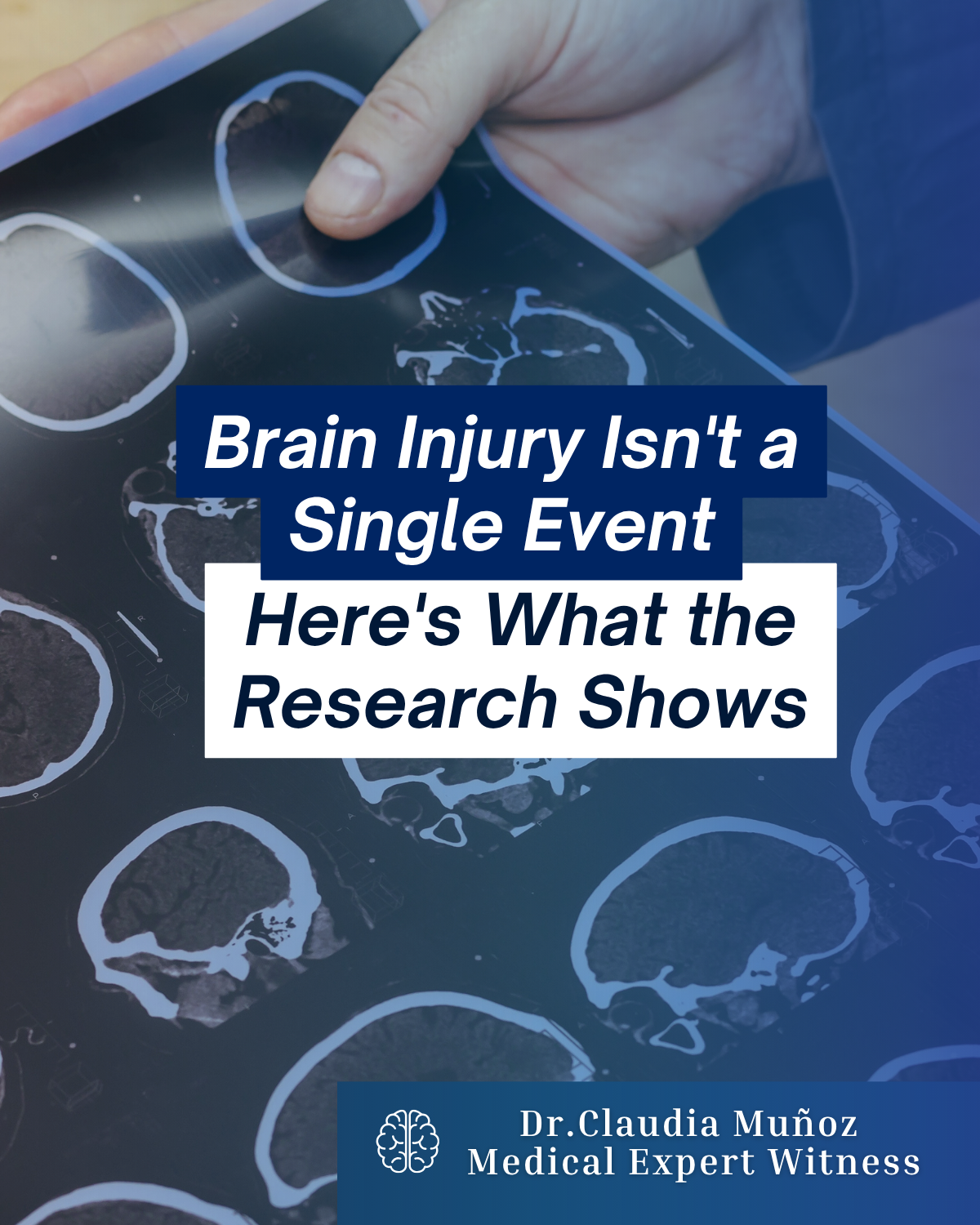
Brain Injury Isn't a Single Event
By Dr. Claudia Munoz, MD, MPH — Board-Certified Neurologist & Epileptologist, Medical Expert Witness
Most people think of brain injury as something that happens once, gets treated, and resolves. The research tells a different story. Brain injury can develop into a chronic health condition, producing recurring or persistent physical, emotional, behavioral, and cognitive effects that change over time — and this reality has real consequences for how these cases are understood, both medically and legally.
Survey research from the Brain Injury Association of America (BIAA) offers a useful gauge of public understanding on this issue. When asked true-or-false questions about the chronic nature of brain injury, roughly three in four U.S. adults correctly recognized that brain injury can develop into a chronic health condition and that recovery isn't always a matter of days. That's an encouraging sign of general awareness.
But a related finding tells a more complicated story: less than three in ten U.S. adults associate brain injury with an invisible or hidden disability — placing it well behind conditions like mental health disorders, diabetes, and arthritis in public perception as a "hidden" condition.
This gap matters. People broadly understand that brain injury can be long-lasting, but far fewer recognize that it often doesn't look like anything from the outside.
Brain injury is frequently invisible to the casual observer. A person can have significant, persistent cognitive or emotional effects while appearing completely unremarkable in daily interactions — including in a deposition, an independent medical exam, or in front of a jury.
When an injury doesn't visibly present, it often doesn't receive the same recognition, support, or resources as more visible conditions. This is a real barrier to appropriate treatment, and in a legal context, it's a real barrier to a claim being properly understood and valued.
Brain Injury as a Chronic Condition: Where This Understanding Comes From
In 2009, the Brain Injury Association of America published a position paper titled "Conceptualizing Brain Injury as a Chronic Disease." Its central argument was straightforward but significant: TBI is not always a solitary event, and not everyone recovers completely. The paper called on the scientific and healthcare communities to recognize this chronicity and address it more directly in research, clinical care, and funding.
Since then, the scientific community and general public understanding of brain injury's chronic nature has grown substantially. What has lagged behind, according to ongoing advocacy from BIAA, is funding and clinical care that matches that understanding.
Research has also connected brain injury to a broader set of long-term health risks, including associations with cardiac disease, diabetes, and neurodegenerative conditions such as Parkinson's and Alzheimer's disease — underscoring that the effects of a single injury can extend well beyond the brain itself and well beyond the initial recovery period.
A "normal" presentation doesn't mean recovery. Given how often brain injury remains invisible, a client who appears unremarkable in an exam or deposition may still be managing significant, real effects.
Chronic doesn't mean stable. Brain injury effects can change over time — sometimes improving, sometimes resurfacing, sometimes emerging later. A single point-in-time evaluation may not capture this.
Public perception can work against a claim. Because most people don't associate brain injury with an invisible disability, a jury may need this concept explained clearly and credibly — an area where expert testimony carries particular weight.
As always, each case depends on its own facts and clinical history. This article reflects general research findings and clinical understanding, not a determination for any specific case.
Work With a Medical Expert Witness
If you're handling a case where the chronic, sometimes invisible nature of brain injury needs to be clearly explained, a thorough neurological evaluation and expert opinion can help ensure the injury is properly understood — not underestimated because it isn't visible.
I provide independent medical examinations, medical record review, expert report writing, and deposition and trial testimony for plaintiff and defense attorneys handling traumatic brain injury cases.
📩 doctor.claudia@gmail.com | info@drclaudiamunoz.com
Dr. Claudia Munoz, MD, MPH Neurologist | Epileptologist | Medical Expert Witness
Source: Brain Injury Association of America, survey research and "Conceptualizing Brain Injury as a Chronic Disease" (2009).
#TraumaticBrainInjury #TBI #MedicalExpertWitness #Neurology #ForensicNeurology #LitigationSupport #PersonalInjuryLaw
