Helmet vs. No Helmet: What Changes in Traumatic Brain Injury Cases?
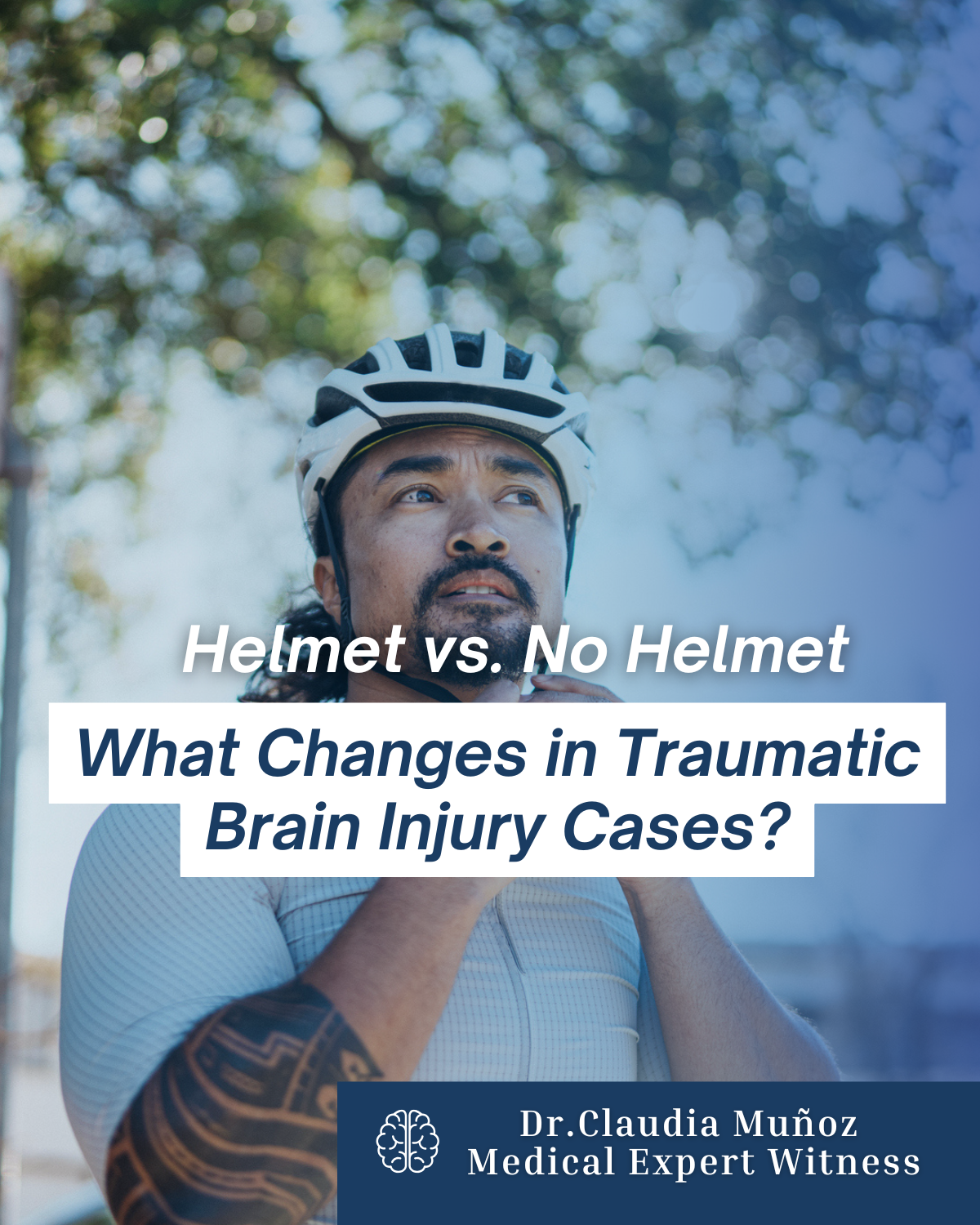
Motorcycle collisions are among the most severe mechanisms of injury in traumatic brain injury (TBI) cases. One of the most critical variables influencing both injury pattern and outcome is helmet use.
Helmets play a significant role in reducing the risk and severity of brain injury, but they do not eliminate the possibility of TBI.
Helmets are designed to absorb and redistribute impact forces, decreasing the likelihood of skull fractures and intracranial hemorrhage. As a result, helmeted riders are more likely to survive high-impact collisions and may present with fewer visible structural injuries.
However, this does not mean the absence of brain injury.
Even with helmet use, riders may experience:
Concussion or mild traumatic brain injury
Diffuse axonal injury due to rotational forces
Cognitive and functional impairment
This is because helmets are less effective at preventing rotational acceleration, which is a key mechanism in disrupting neural pathways.
In contrast, unhelmeted riders are at significantly higher risk for:
Severe brain injury
Skull fractures
Intracranial bleeding
Higher mortality rates
From a medico-legal perspective, helmet use often becomes a focal point in litigation.
In some cases, the presence of a helmet may be used to argue that injury severity should be minimal. Conversely, the absence of a helmet may be used to attribute greater injury severity.
However, neurological evaluation must go beyond this binary interpretation.
The critical question remains:
What forces were transmitted to the brain, and are they sufficient to explain the clinical presentation?
Accurate analysis requires consideration of:
Mechanism of injury and dynamics of the crash
Type and direction of forces involved
Clinical symptoms and progression
Correlation with known neurological patterns
Helmet use modifies risk—but it does not define the presence or absence of brain injury.
As a neurologist and medical expert witness, my role is to provide objective, evidence-based analysis to determine how the mechanism of injury relates to the observed neurological findings.
📩 For case-specific neurological analysis, expert reports, or testimony in TBI cases, please contact:
doctor.claudia@gmail.com
info@drclaudiamunoz.com
Dr. Claudia
Neurologist | Medical Expert Witness
Traumatic Brain Injury & Neurological Cases
