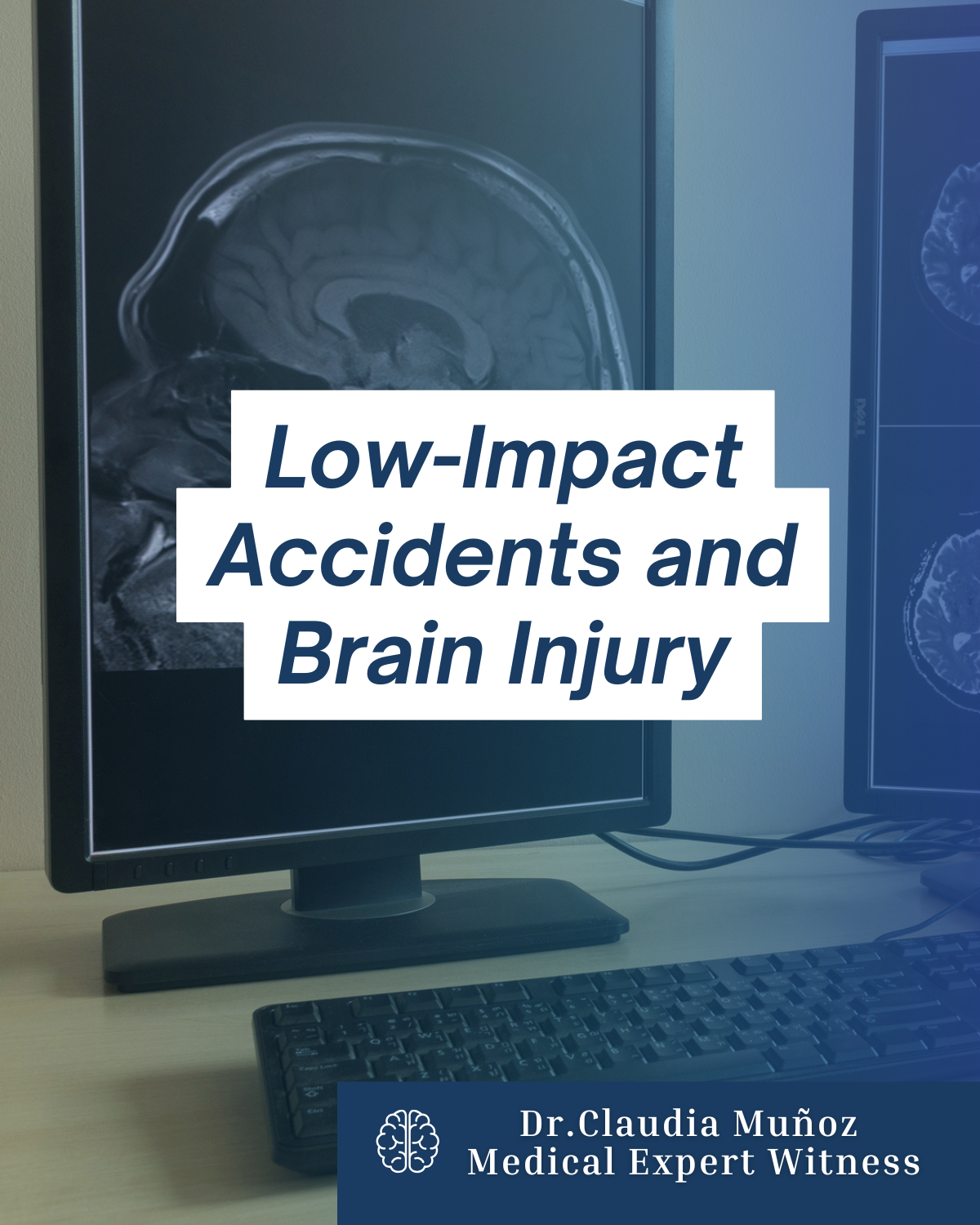
Low-Impact Accidents and Brain Injury
Low-impact accidents are often perceived as minor events, particularly in the absence of visible injury or significant property damage.
In the context of traumatic brain injury (TBI), however, this assumption may be misleading.
From a neurological standpoint, the severity of a brain injury is not determined solely by the apparent intensity of the event. Instead, it depends on the biomechanics of the forces involved, including acceleration, deceleration, and rotational movement.
Even in low-speed or low-impact incidents, these forces can be sufficient to disrupt normal brain function.
One critical factor is the element of unexpected impact.
When an individual is unprepared for a collision, the lack of anticipatory muscular response may allow for greater transmission of force to the brain, increasing the potential for injury.
Additionally, rotational forces—which are not always apparent—can result in microscopic disruption of neural pathways, commonly associated with diffuse axonal injury.
Importantly, traumatic brain injury may occur:
Without direct head impact
Without loss of consciousness
Without visible abnormalities on CT or MRI
Patients may nevertheless present with:
Cognitive slowing
Memory impairment
Difficulty with attention and concentration
Headaches or dizziness
Mental fatigue
This creates a frequent disconnect between the perceived severity of the accident and the clinical presentation of the patient.
In medico-legal cases, low-impact mechanisms are often used to challenge the plausibility of brain injury. However, neurological evaluation does not rely on perception alone.
The key question is whether the mechanism of injury is capable of producing the observed neurological findings, based on established scientific principles.
Accurate assessment requires:
Analysis of the biomechanics of the event
Evaluation of symptom progression over time
Correlation with known patterns of brain injury
Consideration of alternative explanations
Both overestimation and underestimation of injury may occur when these factors are not carefully considered.
As a neurologist and medical expert witness, my role is to provide objective, evidence-based analysis to determine whether the clinical presentation is consistent with the reported mechanism of injury.
In low-impact accidents, the absence of dramatic external findings does not necessarily reflect the absence of neurological injury.
📩 For case-specific neurological analysis, expert reports, or testimony in TBI cases, please contact:
Dr. Claudia
Neurologist | Medical Expert Witness
Traumatic Brain Injury & Neurological Cases
