
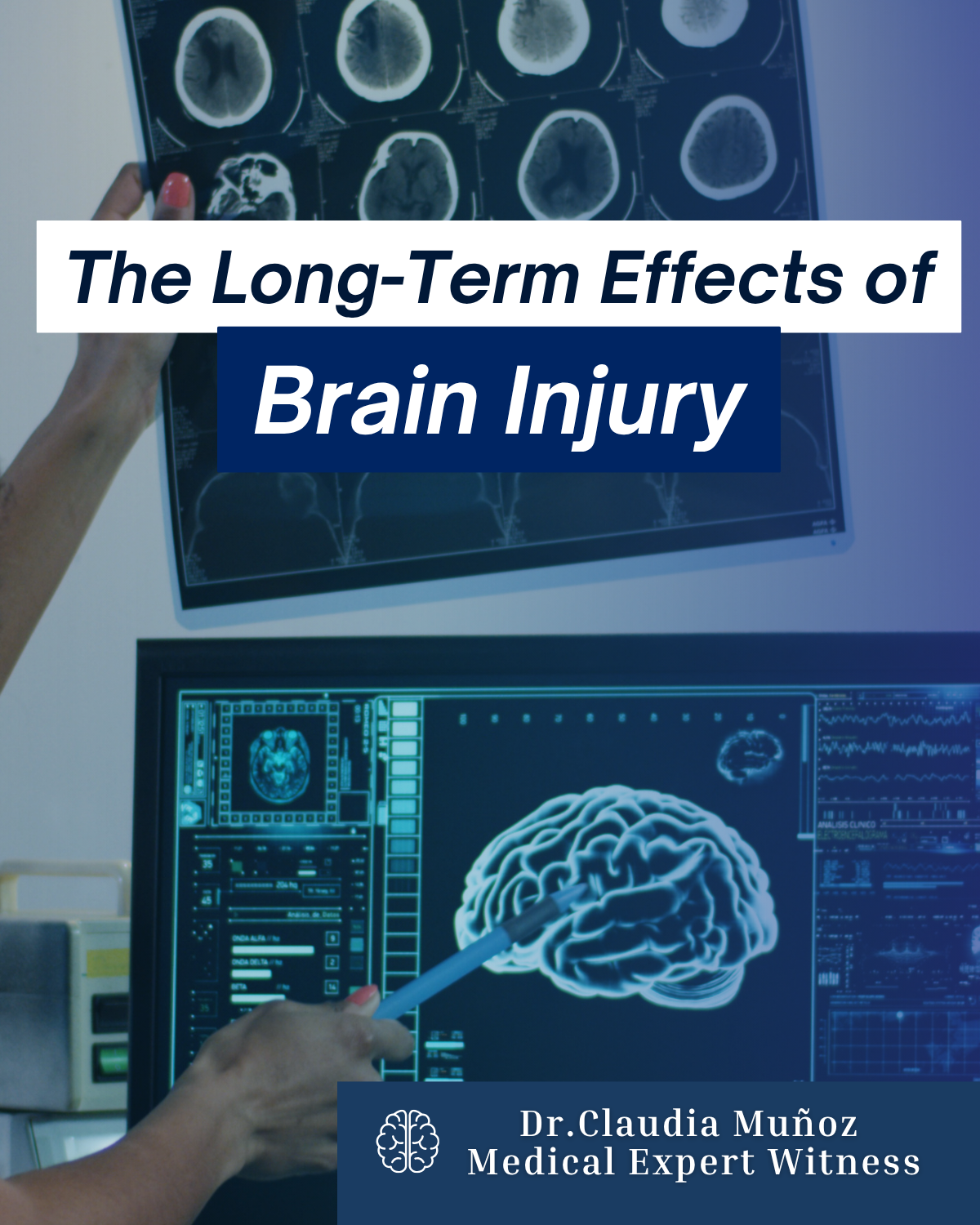
The Long-Term Effects of Traumatic Brain Injury
Make it stand out
Whatever it is, the way you tell your story online can make all the difference.
By Dr. Claudia Munoz, MD, MPH — Board-Certified Neurologist & Epileptologist, Medical Expert Witness
A TBI case often centers heavily on the initial injury and immediate treatment — but for many patients, the more significant story unfolds over months and years afterward. Understanding the long-term effects of traumatic brain injury is essential to accurately valuing a case and representing a client's full experience.
TBI recovery timelines vary widely, and severity at the time of injury doesn't always predict long-term outcome. Some patients with mild TBI develop lasting symptoms, while some with more severe injuries regain significant function over time. What's consistent across cases is that recovery is rarely a straight line — symptoms can improve, plateau, or resurface under stress, fatigue, or cognitive demand.
This matters in litigation because a snapshot evaluation — a single exam months or years after the injury — may not capture the full picture of how the injury has actually affected someone's life.
Common Long-Term Effects
Cognitive effects. Persistent difficulties with memory, attention, processing speed, and executive function are among the most common long-term consequences of TBI, even in cases initially classified as mild.
Physical effects. Chronic headaches, dizziness, fatigue, and sensory sensitivities can persist well beyond the acute recovery period. In more severe cases, motor deficits and coordination problems may be permanent.
Neurological complications. Post-traumatic seizures can develop months or even years after the initial injury, and TBI is a recognized risk factor for later-onset epilepsy.
Psychological and behavioral effects. Depression, anxiety, irritability, and personality changes are well-documented long-term consequences of TBI, and can significantly affect relationships, employment, and daily functioning.
Emerging long-term risk considerations. Research continues to examine the relationship between TBI and increased long-term risk of neurodegenerative conditions, particularly after repeated or more severe injuries — an area evolving as more longitudinal data becomes available.
Why Long-Term Effects Are Often Underestimated
Improvement doesn't mean resolution. A patient who returns to work or daily activities may still be managing significant ongoing symptoms — cognitive fatigue, compensatory strategies, or reduced capacity — that aren't obvious in a brief evaluation.
Symptoms can be delayed or cumulative. Some long-term effects, particularly seizures or cognitive decline, may not emerge until well after the initial injury and recovery period.
Functional impact is often underdocumented. Family members and employers frequently notice changes — in personality, stamina, or reliability — that don't appear in a clinical record unless specifically documented.
Case Evaluation
A single evaluation may not capture the full impact. Longitudinal documentation — treatment records, functional assessments, and input from those who know the client's day-to-day life — often provides a more accurate picture than one exam.
Future risk matters, not just current symptoms. Where applicable, the potential for delayed complications like post-traumatic seizures should be considered in evaluating long-term prognosis and future care needs.
Functional and vocational impact deserve attention. Cognitive and behavioral changes that affect a person's ability to work or maintain relationships are a significant part of the injury's true cost, even when they're harder to quantify than physical symptoms.
As always, each case depends on its specific facts and medical history. This article outlines general clinical patterns, not a prognosis for any specific individual.
Work With a Medical Expert Witness
If you're evaluating the long-term impact of a TBI for a case, a thorough neurological review — one that accounts for the full trajectory of the injury, not just its initial presentation — can help ensure the client's experience is accurately represented.
I provide independent medical examinations, medical record review, expert report writing, and deposition and trial testimony for plaintiff and defense attorneys handling traumatic brain injury cases.
📩 doctor.claudia@gmail.com | info@drclaudiamunoz.com
Dr. Claudia Munoz, MD, MPH Neurologist | Epileptologist | Medical Expert Witness
#TraumaticBrainInjury #TBI #MedicalExpertWitness #Neurology #ForensicNeurology #LitigationSupport #PersonalInjuryLaw
