
Electrocution and Traumatic Brain Injury: A Neurologist's Perspective
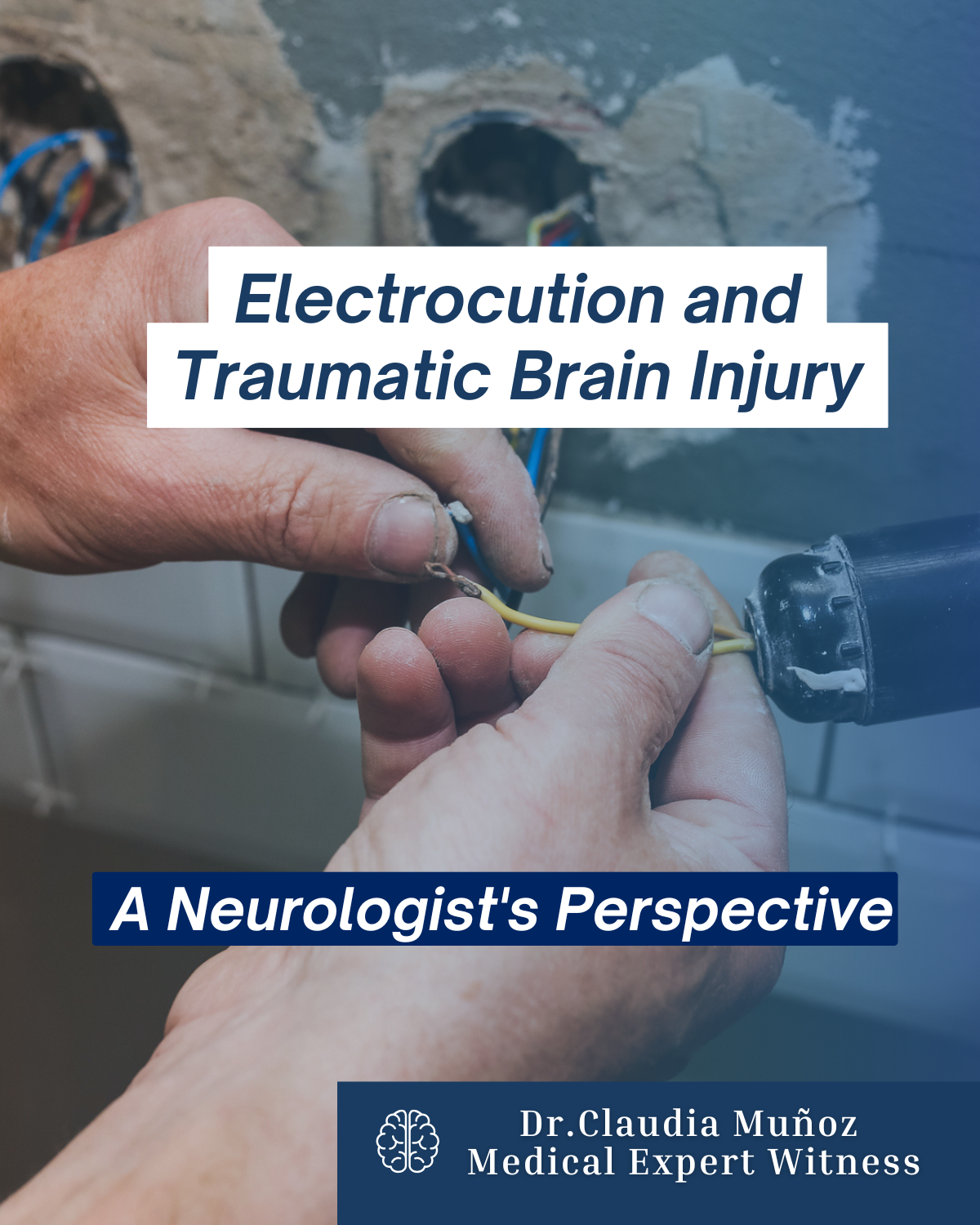
When most people think about electrocution injuries, they picture visible harm: burns, scarring, cardiac arrest. What is far less understood — by patients, employers, insurers, and often even by treating physicians — is what happens to the brain.
As a board-certified neurologist and epileptologist who regularly reviews electrical injury cases in a medical-legal context, I want to walk through what the clinical evidence actually shows, and why this matters so much in litigation.
How Electrical Current Affects the Brain
Electrical current doesn't need to pass directly through the skull to affect the brain. When current travels through the body — even through a limb or the torso — it can still disrupt neurological function through several mechanisms:
Direct thermal injury to neural tissue along the current's pathway
Disruption of cell membrane electrical potentials, particularly in neurons, which are highly sensitive to electrical disturbance
Secondary injury from falls, muscle contraction, or loss of postural control at the moment of shock
Vascular effects, including microvascular injury that can impair blood flow to brain tissue over time
None of these mechanisms require a current pathway that runs "through the head" to produce measurable neurological consequences.
Why Standard Imaging Often Looks Normal
This is the point I emphasize most often in expert reports: a normal CT or MRI does not rule out brain injury from electrocution.
Routine imaging is designed to detect structural abnormalities — bleeding, swelling, mass lesions. Much of the injury caused by electrical current is functional rather than structural. It occurs at a cellular and network level that conventional imaging simply isn't built to resolve.
This is where neuropsychological testing, detailed clinical history, and a thorough understanding of injury mechanism become essential. A patient can have a completely unremarkable scan and still have measurable, real deficits in memory, attention, and processing speed.
The Delayed Onset Problem
Another pattern I see repeatedly in electrical injury cases is delayed symptom onset. Unlike a traumatic blow to the head, where symptoms often present immediately, electrical injury can produce a delayed neurological picture:
New-onset seizures appearing weeks or months after the initial event
Progressive cognitive changes that weren't apparent in the initial ER visit
Mood and sleep disturbances that emerge gradually
This delay is frequently misinterpreted — by insurers, and sometimes by opposing counsel — as evidence that the symptoms are unrelated to the electrical event. In reality, delayed presentation is a well-documented pattern in electrical CNS injury, and it needs to be evaluated against the specific mechanism: voltage, current pathway, duration of contact, and points of entry and exit.
Common Symptoms Following Electrical Injury
In my clinical and expert witness experience, the neurological symptoms I see most often following electrocution include:
Cognitive impairment, particularly with memory and executive function
Reduced processing speed
Mental fatigue and difficulty concentrating
New-onset or worsening seizures
Chronic headaches
Mood changes, including anxiety and depression
Sleep disturbance
Many of these symptoms overlap with mild traumatic brain injury more broadly — which is part of why electrical injury cases benefit from a neurologist's evaluation rather than relying solely on burn or trauma specialists.
A Note on Case Evaluation
Every electrical injury case is different, and causation always needs to be assessed individually — factors like voltage, AC vs. DC current, duration of contact, current pathway through the body, and pre-existing conditions all play a role in a defensible medical opinion. This article outlines general clinical patterns, not a determination for any specific case.
Working With a Medical Expert Witness
If you are an attorney handling an electrocution or electrical injury case involving neurological symptoms, a thorough medical record review and clinical evaluation can make the difference between a case that's dismissed on the basis of "normal imaging" and one that accurately reflects the client's actual injury.
I provide independent medical examinations, medical record review, expert report writing, and deposition and trial testimony for plaintiff and defense attorneys handling electrical injury and traumatic brain injury cases.
📩 For expert inquiries or medical expert witness consultations:
Dr. Claudia Munoz, MD, MPH Neurologist | Epileptologist | Medical Expert Witness
