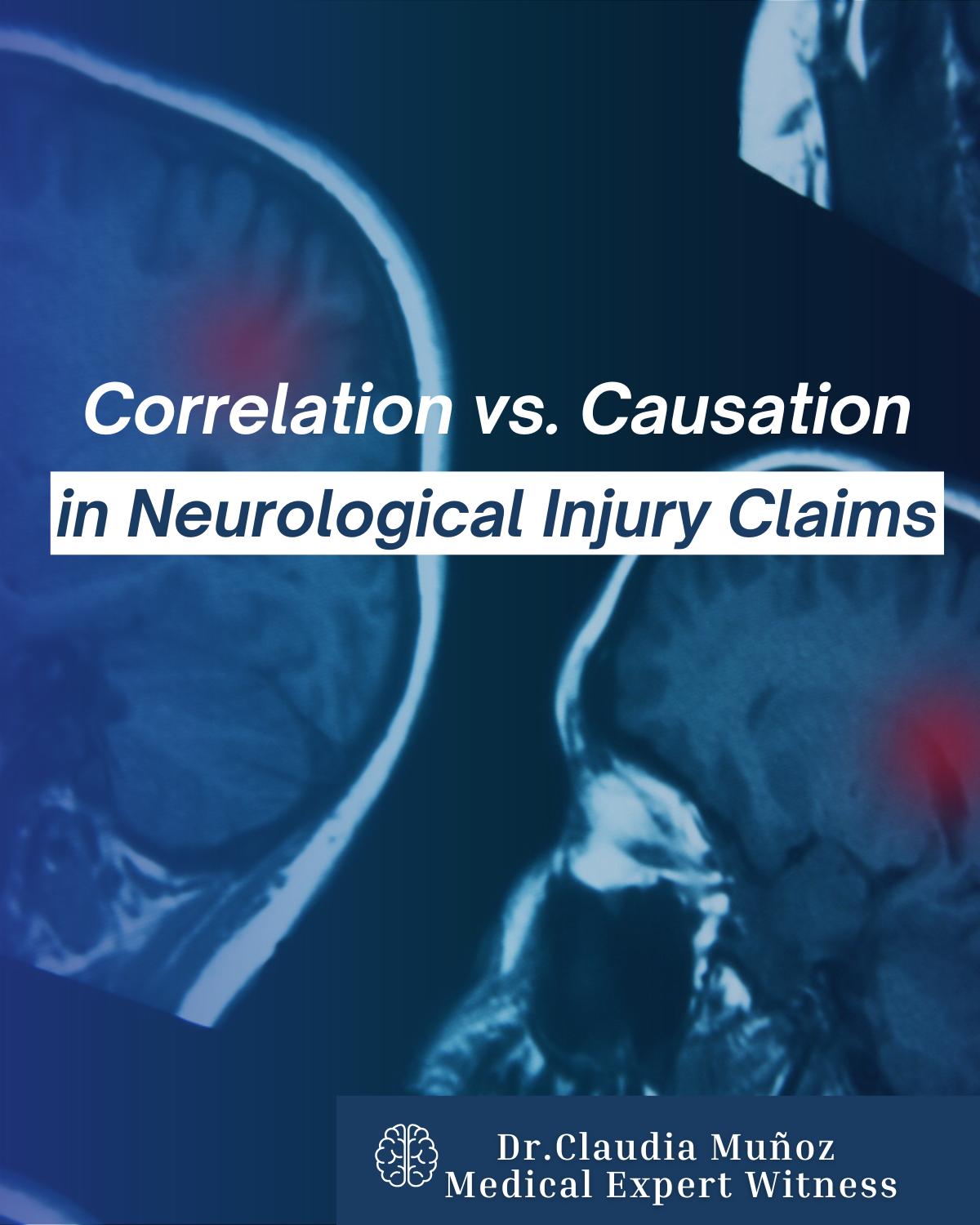
Correlation vs. Causation in Neurological Injury Claims
In neurological injury claims, one of the most frequent—and consequential—errors is assuming that because symptoms appeared after an incident, the incident must have caused them.
This assumption reflects a classic logical fallacy: confusing correlation with causation.
From a neurological and medical-legal perspective, temporal association alone is not sufficient to establish brain injury causation. Proper evaluation requires a structured, evidence-based analysis grounded in neurobiology, clinical findings, and consistency with known injury mechanisms.
In legal claims, this distinction is critical. The presence of symptoms following an accident may suggest causation, but careful neurological assessment is needed to ascertain if that probability is more than coincidence.
Many symptoms commonly cited in neurological claims are non-specific and can arise from multiple causes, including psychological stress, sleep disruption, medications, or pre-existing conditions.
Frequently reported symptoms include:
Headache
Dizziness
Brain fog or memory complaints
Fatigue
Difficulty concentrating
Mood or irritability changes
While these symptoms can occur after traumatic brain injury (TBI), they are not diagnostic on their own and must be evaluated within a broader medical context.
When evaluating alleged neurological injury, neurologists rely on a structured medical framework rather than symptom timing alone.
Key questions include:
1. Is There a Plausible Injury Mechanism?
The claimed injury must align with known neurological injury thresholds and biomechanics. Low-force or indirect events may not generate sufficient energy to cause structural or functional brain damage.
2. Are There Objective Findings?
Objective evidence may include:
Abnormal neurological examination
Imaging findings consistent with acute injury
Documented loss of consciousness or post-traumatic amnesia
Consistent neurocognitive deficits on formal testing
The absence of objective findings significantly weakens causation claims.
3. Were Symptoms Present Before the Incident?
Medical records often reveal:
Prior headaches or migraines
Anxiety, depression, or sleep disorders
Previous concussions or neurological complaints
Pre-existing conditions must be distinguished from alleged new injuries.
4. Does the Timeline Make Medical Sense?
Delayed or evolving symptoms without supporting findings raise important causation questions. Neurological injuries typically follow predictable clinical patterns.
5. Are Alternative Explanations More Likely?
Neurologists consider confounding factors such as:
Psychological stress or litigation-related anxiety
Medication side effects
Pain syndromes
Secondary gain or symptom amplification
Expert neurological evaluation helps:
Differentiate true injury from coincidental symptom onset
Identify inconsistencies between complaints and findings
Clarify whether claimed deficits are medically supported
Assist courts and insurance teams in understanding complex neurological concepts
This objective analysis is especially critical in insurance defense, negligence litigation, and disputed injury claims.
Neurology operates on evidence, consistency, and physiologic plausibility.
Symptoms alone—no matter how sincerely reported—do not establish neurological causation. Proper evaluation requires expert analysis that separates what is temporally associated from what is medically caused.
📩 For inquiries or medical expert witness consultations related to traumatic brain injury and neurological cases, please contact me directly by filling out the form.
Dr. Claudia
Neurologist | Medical Expert Witness
Traumatic Brain Injury & Neurological Cases
