
How a Neurologist Expert Witness Evaluates Mild TBI vs. Severe Claims
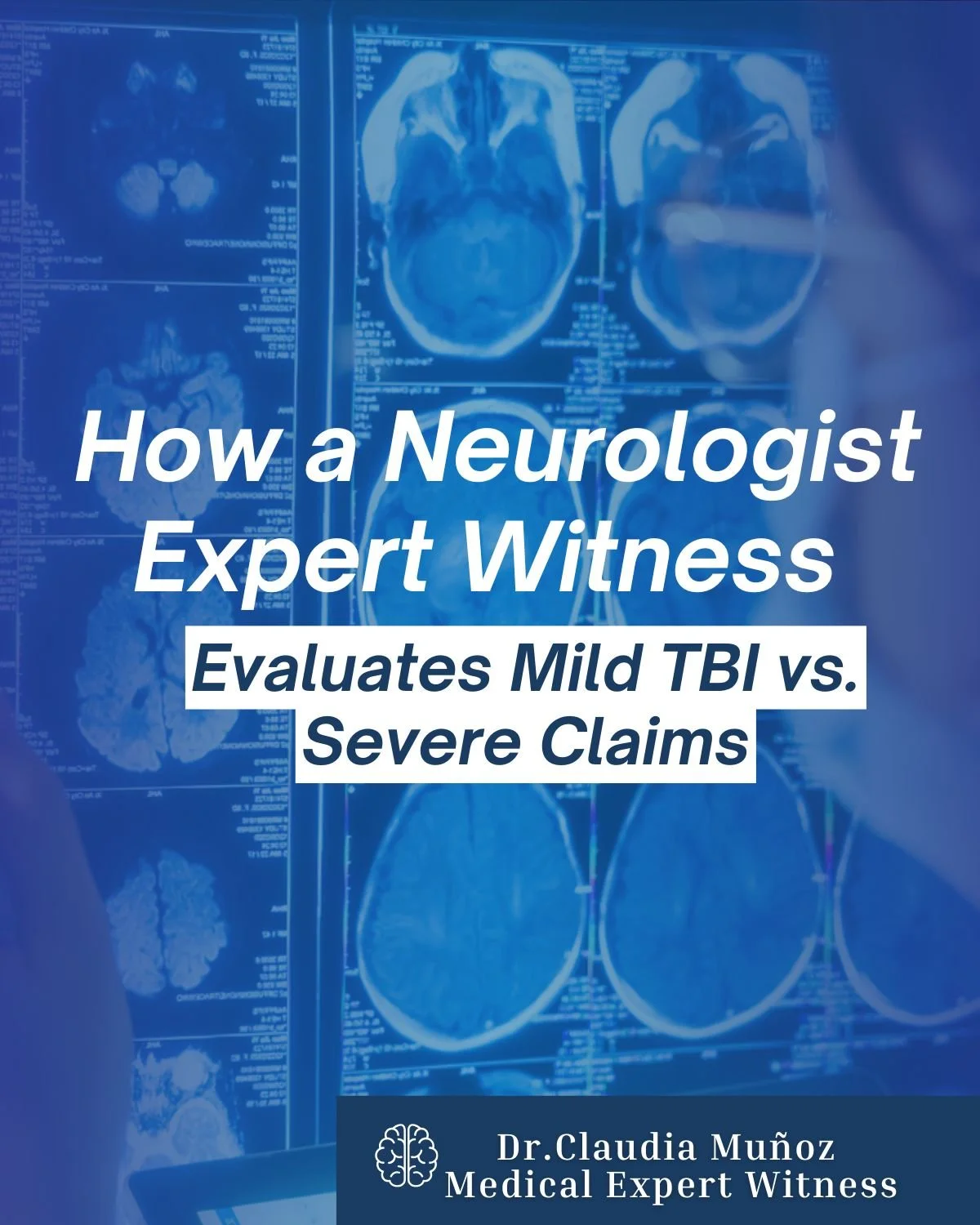
In personal injury litigation, traumatic brain injury is often central to questions of causation, severity, and long-term impact. One of the most common challenges is determining whether the clinical evidence truly supports severe neurological impairment following a mild traumatic brain injury (TBI)
As a neurologist and medical expert witness, my role is to perform an objective, evidence-based evaluation that connects medical findings with established neurological principles.
Step 1: Analyzing the Mechanism of Injury
The evaluation begins with understanding how the injury occurred. The amount of force, direction of impact, presence of rotational acceleration, and immediate symptoms all provide critical context.
Low-energy mechanisms typically produce different clinical trajectories than high-velocity impacts, blasts, or severe crashes. The mechanism must be medically consistent with the degree of impairment being claimed.
Step 2: Reviewing Acute Medical Documentation
Emergency department records, paramedic reports, and early clinical notes often provide the most reliable indicators of injury severity.
Key elements include:
Glasgow Coma Scale scores
Duration of loss of consciousness, if any
Post-traumatic amnesia
Immediate neurological symptoms
These early findings establish the baseline for determining whether an injury meets criteria for mild, moderate, or severe TBI.
Step 3: Evaluating Symptom Patterns Over Time
Symptom progression is one of the most important components of analysis.
Neurologists assess:
Timing of symptom onset
Consistency of complaints across medical visits
Functional limitations documented by treating providers
Expected recovery patterns based on clinical research
Symptoms that evolve in ways inconsistent with known neurological recovery patterns require careful evaluation.
Step 4: Correlating Objective Findings
Whenever possible, objective data is reviewed, including:
Neuroimaging
Neurological examinations
Neuropsychological testing
Functional assessments
It is important to recognize that mild TBI can occur with normal imaging. However, claims of severe and permanent impairment generally require corroborating clinical evidence.
Not all symptoms reported after an incident are necessarily caused by the injury itself.
A thorough evaluation considers:
Pre-existing medical or neurological conditions
Psychological factors such as anxiety, depression, or trauma-related stress
Sleep disorders, chronic pain, or medication effects
Social or occupational stressors
A complete analysis ensures that conclusions about causation are medically sound.
Brain injury cases often hinge on nuanced clinical details that are not immediately obvious in medical records. A structured neurological evaluation helps clarify:
Whether the diagnosis is medically supported
Whether symptom severity is consistent with the injury
Whether long-term impairment is neurologically plausible
This objective approach allows attorneys to make informed decisions based on clear, scientifically grounded medical opinions.
📩 For inquiries or medical expert witness consultations related to traumatic brain injury and neurological cases, please contact me directly by filling out the form.
Dr. Claudia Munoz
Neurologist | Medical Expert Witness
Traumatic Brain Injury & Neurological Cases
