Why a Normal MRI Does Not Exclude Brain Injury
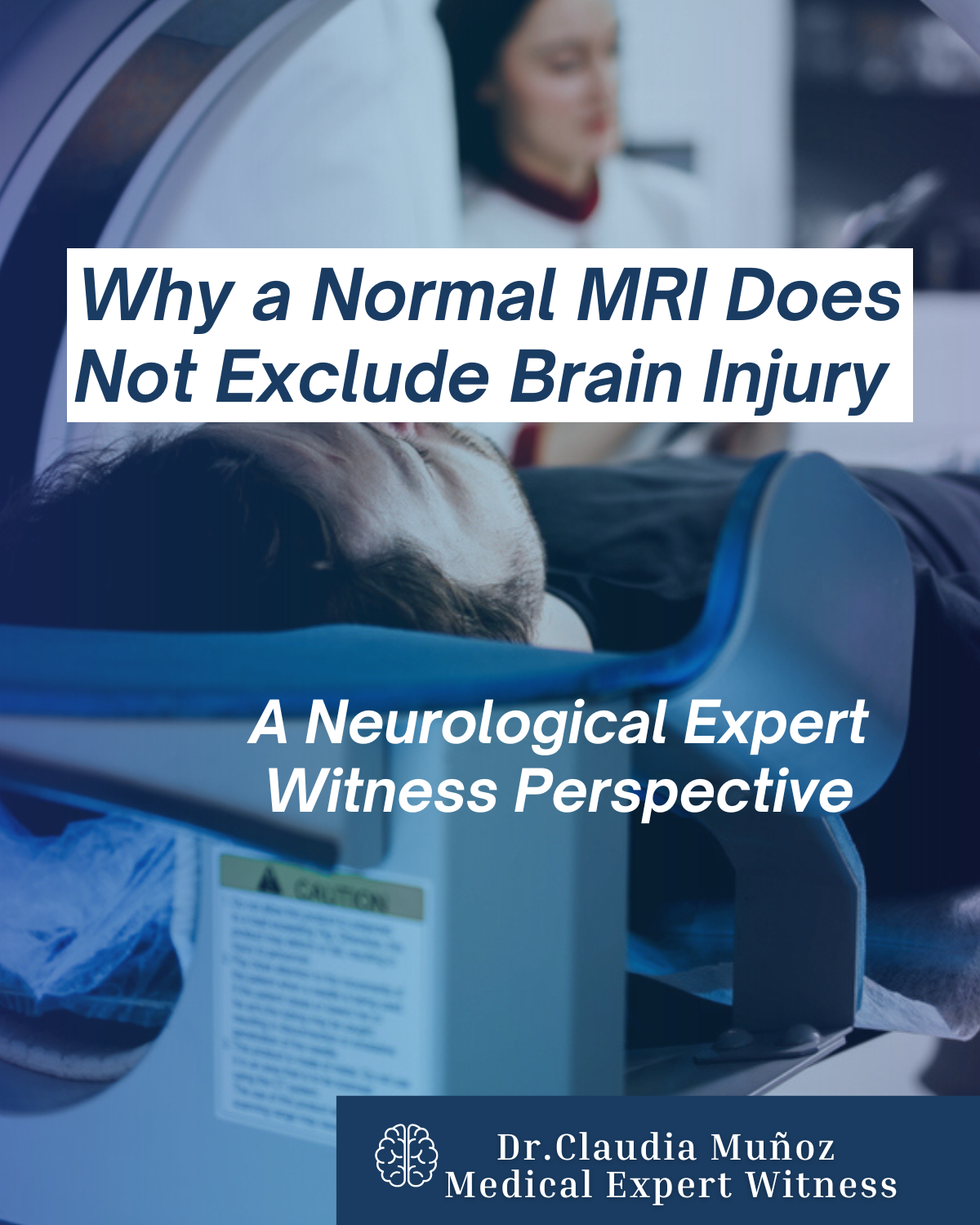
One of the most common misconceptions in traumatic brain injury (TBI) cases—both clinically and legally—is the belief that a normal MRI or CT scan rules out brain injury. While neuroimaging is an essential diagnostic tool, normal imaging findings do not exclude the presence of a traumatic brain injury.
Understanding the capabilities and limitations of neuroimaging is critical for accurate medical evaluation, appropriate patient care, and informed legal analysis.
Computed tomography (CT) scans and conventional magnetic resonance imaging (MRI) are highly effective for identifying:
Acute intracranial hemorrhage
Skull fractures
Cerebral edema
Large structural lesions
Mass effect or midline shift
These modalities are invaluable in the acute setting, particularly for identifying life-threatening injuries that require immediate intervention.
However, they were not designed to detect many of the underlying mechanisms responsible for the majority of traumatic brain injuries.
The majority of TBIs—especially mild to moderate injuries—occur at a cellular and functional level, rather than as gross structural damage.
Rapid acceleration–deceleration and rotational forces, such as those seen in motor vehicle collisions, falls, or sports injuries, can cause:
Axonal stretching and shearing
Disruption of neuronal membranes
Altered neurotransmitter release
Metabolic and energy failure within neurons
These changes affect how the brain functions, not necessarily how it appears on standard imaging.
As a result, conventional CT and MRI scans may appear “normal” despite significant neurological dysfunction
The majority of TBIs—especially mild to moderate injuries—occur at a cellular and functional level, rather than as gross structural damage.
Rapid acceleration–deceleration and rotational forces, such as those seen in motor vehicle collisions, falls, or sports injuries, can cause:
Axonal stretching and shearing
Disruption of neuronal membranes
Altered neurotransmitter release
Metabolic and energy failure within neurons
When someone states, “The MRI was normal,” this should not be interpreted as a definitive medical conclusion.
Instead, it reflects the technical limitations of standard imaging, not the absence of brain injury.
A normal scan indicates that no gross structural abnormalities were identified—it does not assess neuronal connectivity, axonal integrity, or cerebral metabolism.
Equating normal imaging with no injury is a fundamental medical error.
Neuroimaging is a powerful tool—but it is not a definitive test for traumatic brain injury.
A normal CT or MRI does not negate the presence of neurological injury, nor does it invalidate a patient’s symptoms. Accurate assessment demands clinical expertise, careful analysis, and an appreciation for what imaging can—and cannot—reveal.
📩 For inquiries or medical expert witness consultations related to traumatic brain injury and neurological cases, please contact me directly by filling out the form.
Dr. Claudia
Neurologist | Medical Expert Witness
Traumatic Brain Injury & Neurological Cases
