By Claudia Munoz, MD, MPH. Board-Certified Neurologist, @theneurocurious
Ask most people what protects the brain and they’ll say crosswords or a strict gym routine. Few say: put on a song and move.
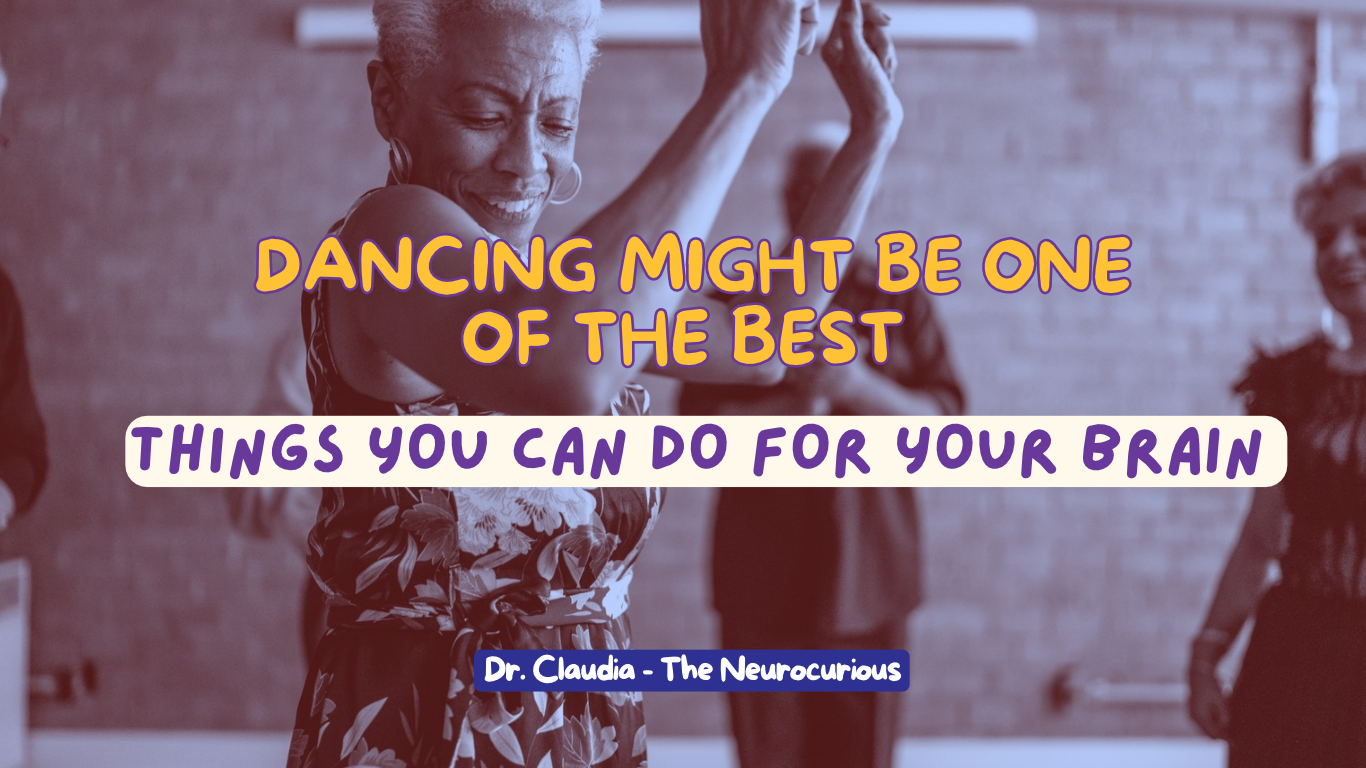
Dance isn’t a cure for anything. But it’s a movement that helps, and it’s one you actually want to do.
Why Dance Is Different
Dance asks your brain to do several hard things at once:
🚶♀️ You’re moving. It supports blood flow, balance, and coordination.
🧩 You’re remembering steps. That trains memory, attention, and planning.
🎶 You’re following music. Rhythm gives your brain a beat to keep timing.
🤝 You’re connecting. Social time lowers stress and loneliness.
What the Research Shows
A review of 53 studies looked at dance in people with brain conditions:
Mild memory problems (MCI): dance improved memory, thinking skills, and planning.
Parkinson’s disease: dance improved balance and walking.
Alzheimer’s disease: not enough evidence yet.
Mood and quality of life: mixed results.
A fair note: Many studies used tango and waltz. We don’t have proof that salsa, bachata, or cumbia work the same way. But they share the same ingredients: music, movement, memory, and people. So I encourage any dance you enjoy.
How to Start
One song a day. Move for 3 to 4 minutes, then build from there.
Pick music you love, like salsa, bachata, or cumbia.
Dance with someone for the social benefit.
Seated dancing counts if balance is a concern.
Before you start: This is general education, not medical advice. If you have balance problems, falls, heart conditions, or a neurological diagnosis, check with your doctor first.
So, What’s Your Song?
Put on a song and let your brain do the rest.
What’s the song that always gets you dancing? Tell me in the comments.
