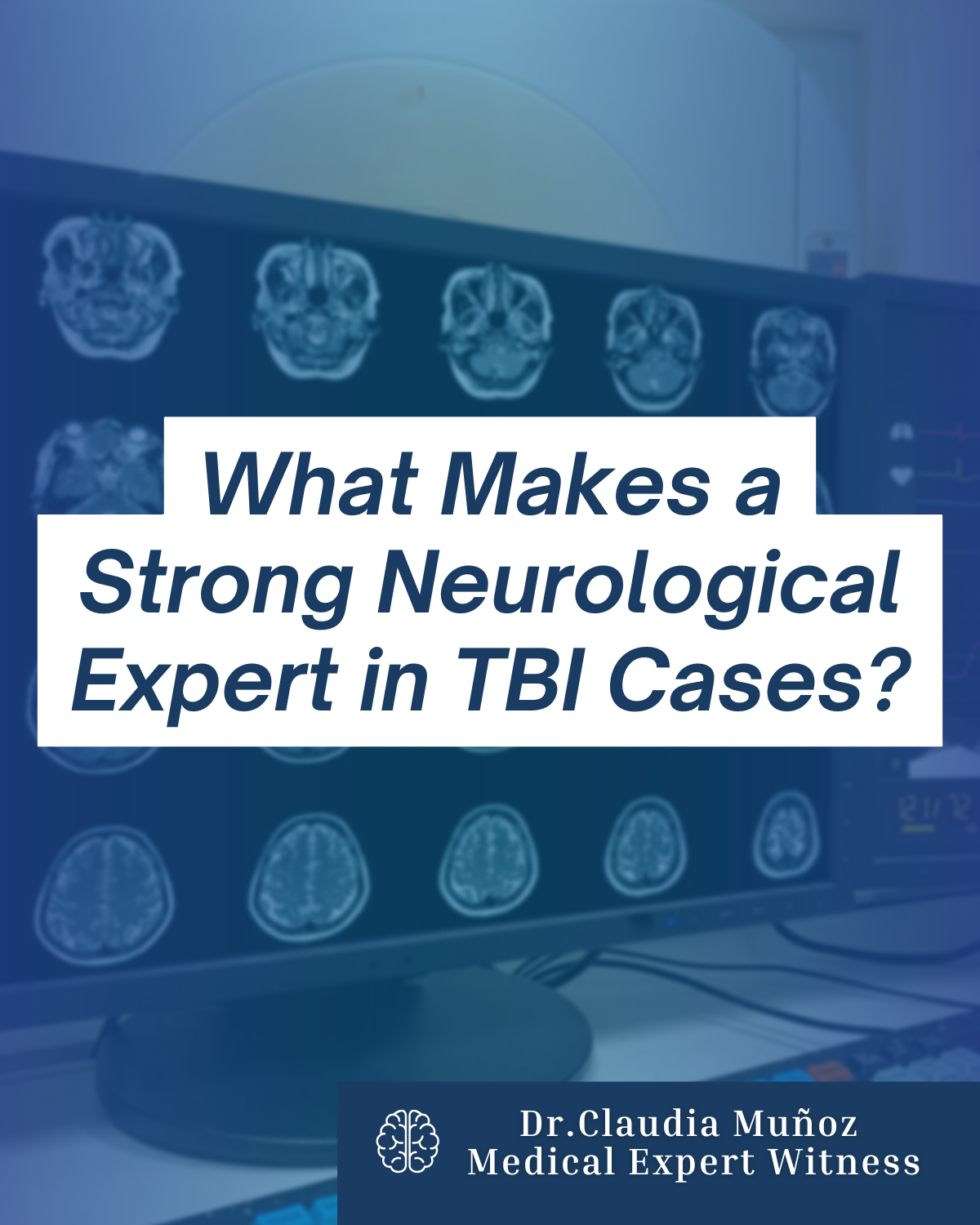
What Makes a Strong Neurological Expert in TBI Cases?
Traumatic brain injury (TBI) cases are among the most complex in both clinical and medico-legal settings. Their evaluation often involves incomplete data, non-specific symptoms, and limitations in diagnostic imaging.
In this context, the role of the neurological expert is critical.
A strong neurological expert in TBI cases does not rely on a single data point, but instead applies a structured, evidence-based approach to determine whether the clinical presentation is consistent with the reported injury.
One of the most important elements is the ability to evaluate the mechanism of injury.
Understanding how forces such as acceleration, deceleration, and rotation affect brain function is essential in determining whether an event is capable of producing the reported neurological findings.
Equally important is the interpretation of clinical symptoms.
Symptoms such as cognitive impairment, fatigue, and memory difficulties are common in TBI cases—but they are also non-specific. A strong expert distinguishes between symptoms that are consistent with brain injury and those that may have alternative explanations.
Another critical factor is recognizing the limitations of imaging.
Normal CT or MRI findings do not exclude brain injury. Many TBI cases involve microscopic and functional disruption that cannot be detected with conventional imaging. A qualified expert understands how to integrate imaging findings within the broader clinical context.
Consistency is also key.
A strong neurological expert evaluates whether the timeline, symptom progression, and clinical findings align with established neurological principles. This includes identifying discrepancies that may suggest over-attribution—or, conversely, recognizing patterns that support the presence of injury.
Finally, clarity of communication is essential.
In TBI cases, complex neurological concepts must be translated into clear, objective, and defensible conclusions that can be understood in a legal setting.
The goal is not advocacy, but accuracy.
In TBI cases, where the distinction between injury and interpretation is often subtle, the strength of the neurological expert can significantly influence how a case is understood.
📩 For case-specific neurological analysis, expert reports, or testimony in TBI cases, please contact:
doctor.claudia@gmail.com
info@drclaudiamunoz.com
Dr. Claudia
Neurologist | Medical Expert Witness
Traumatic Brain Injury Cases
