
Traumatic Brain Injury in Negligence Cases: A Neurological Expert Witness Perspective
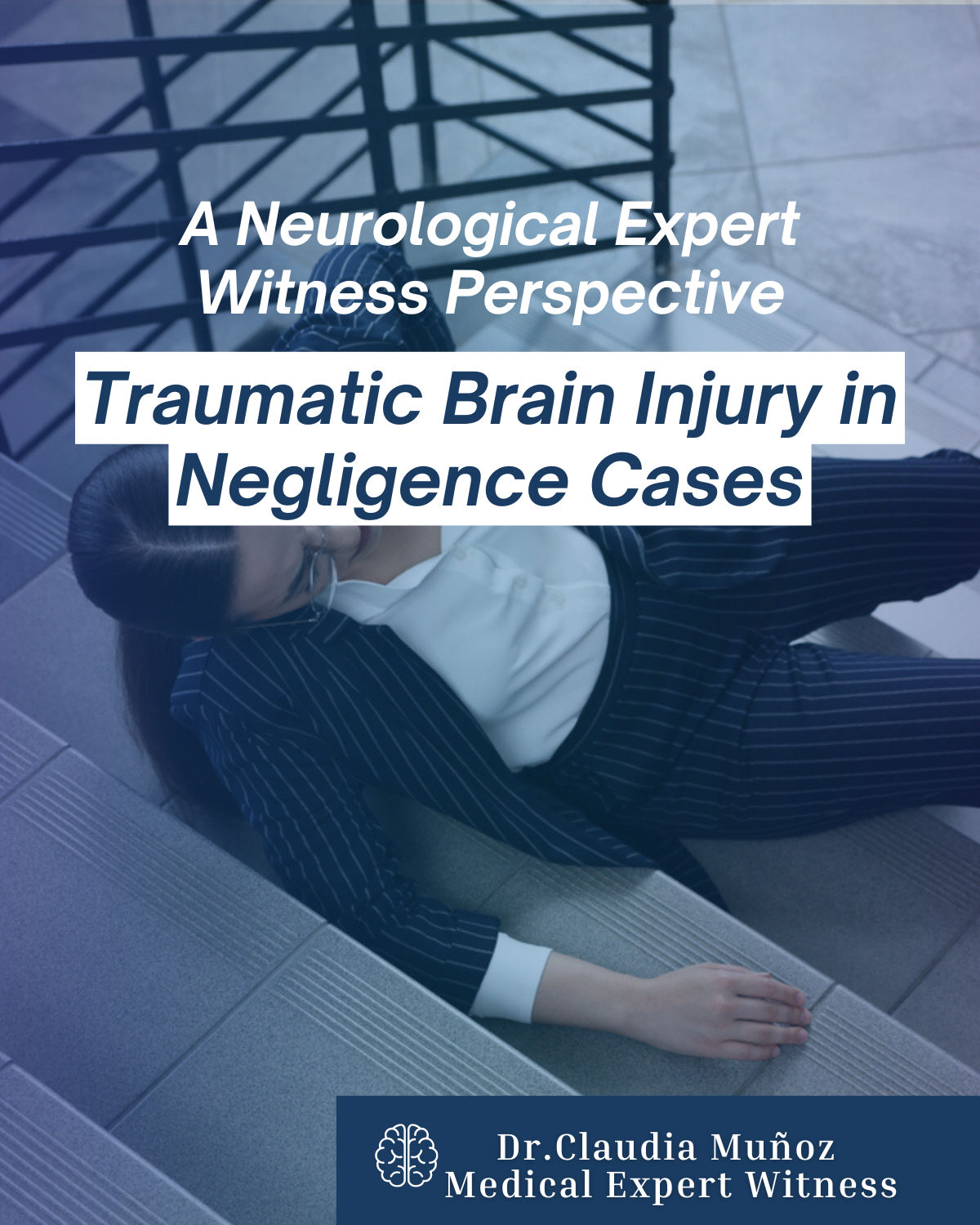
Traumatic Brain Injury (TBI) is frequently misunderstood in negligence litigation. When an incident does not involve a high-speed collision or obvious structural damage on imaging, the presence and severity of a traumatic brain injury may be questioned. From a neurological and expert witness perspective, this approach overlooks well-established mechanisms of brain injury and risks minimizing legitimate neurological harm.
This article explains how traumatic brain injury occurs in negligence cases, why it is often missed, and how expert neurological analysis plays a critical role in legal evaluation.
Traumatic brain injury is defined by the effect of biomechanical forces on brain tissue—not solely by the appearance of imaging studies or the perceived severity of the event. In negligence cases, traumatic brain injury commonly arises from:
Slip and fall accidents
Unsafe premises conditions
Inadequate warnings or safety measures
Improper maintenance or supervision
Sudden acceleration, deceleration, or rotational forces
Even in the absence of direct head impact, these mechanisms can disrupt neuronal membranes, axonal pathways, and cerebral networks. Loss of consciousness, skull fracture, or visible hemorrhage is not required for a diagnosis of traumatic brain injury.
Mechanisms of Injury in Negligence-Related Traumatic Brain Injury
From a neurological standpoint, traumatic brain injury in negligence cases often involves:
Rapid head movement causing acceleration–deceleration injury
Rotational forces leading to diffuse axonal strain
Sudden intracranial pressure changes affecting neuronal signaling
These forces can impair communication between brain regions and initiate metabolic and inflammatory cascades that disrupt normal brain function.
CT scans and standard MRI are effective tools for identifying fractures, hemorrhage, and gross structural injury. However, many traumatic brain injuries involve microscopic and functional abnormalities that fall below the resolution of routine imaging.
Traumatic brain injury may include:
Microscopic axonal disruption
Neuroinflammation
Mitochondrial and metabolic dysfunction
Network-level disconnection between brain regions
As a result, normal imaging does not rule out traumatic brain injury. This distinction is critical in negligence litigation, where injury validity is often challenged based on radiographic findings alone.
Individuals with traumatic brain injury related to negligence may experience symptoms that are delayed, progressive, or fluctuating. Common neurological manifestations include:
Cognitive slowing and reduced mental efficiency
Memory and attention impairment
Executive dysfunction
Headaches or dizziness
Balance or coordination difficulties
Mood, behavioral, or personality changes
The temporal evolution of symptoms is well-documented in traumatic brain injury and should be carefully evaluated when assessing medical causation and functional impact.
Neurological Expert Witness
In negligence cases, expert witness analysis of traumatic brain injury requires more than a review of imaging reports. A neurological expert witness evaluates:
The mechanism of injury and biomechanical plausibility
Consistency between medical records and symptom reports
Timing and progression of neurological symptoms
Objective findings on neurological examination
Functional impact on daily activities and work capacity
This comprehensive approach allows the expert witness to address questions of injury severity, causation, and long-term neurological consequences with medical clarity.
From a medicolegal perspective, traumatic brain injury analysis must integrate clinical neurology with legal standards of causation. Expert witness testimony helps bridge the gap between complex neuroscience and clear, defensible explanations that support informed legal decision-making.
Negligence litigation benefits from expert neurological input when traumatic brain injury is subtle, disputed, or inadequately understood.
Traumatic brain injury should not be dismissed based on normal imaging or assumptions about injury severity. In negligence cases, expert neurological evaluation is essential to accurately assess injury mechanisms, symptom progression, and long-term functional impact.
When traumatic brain injury is properly evaluated, the medical evidence often provides critical insight into causation and damages.
For legal case review, expert medical opinions, or medical expert witness consultation regarding traumatic brain injury, please contact:
📩 doctor.claudia@gmail.com
📩 info@drclaudiamunoz.com
Dr. Claudia Muñoz, MD, MPH
Neurologist | Medical Expert Witness
