
Traumatic Brain Injury: Clinical Impact Beyond Imaging Findings
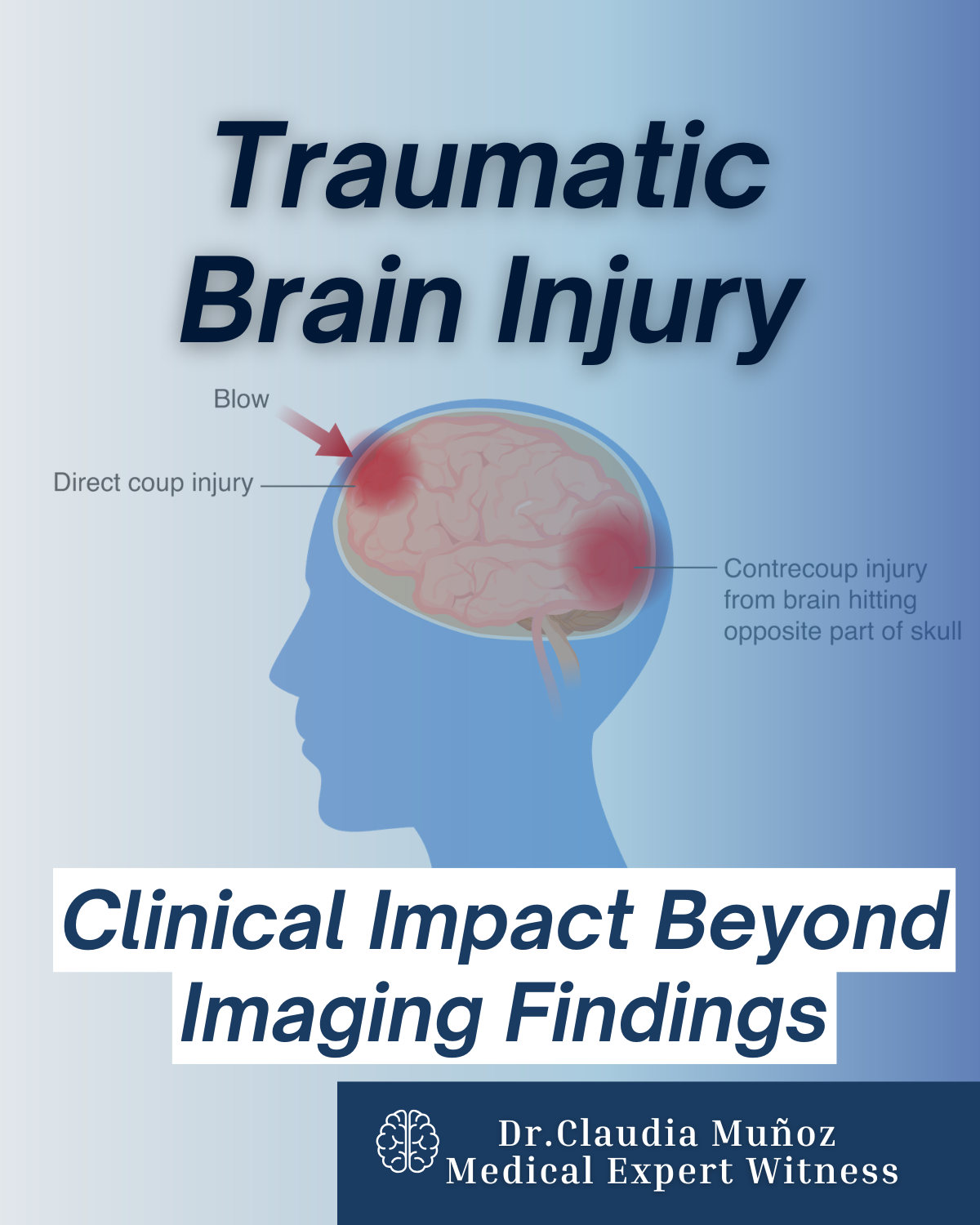
Traumatic brain injury (TBI) results from external forces applied to the head, including direct impact or rapid acceleration-deceleration, leading to disruption of neural pathways. These injuries range from mild concussions to more complex conditions that may result in persistent cognitive impairment.
In cases of mild TBI, neuroimaging—particularly the CT scan—frequently does not demonstrate hemorrhage or structural abnormalities. Despite this, patients may exhibit ongoing neurological symptoms, including:
Executive dysfunction
Reduced processing speed
Memory impairment
Mental fatigue
Impaired attention and concentration
These clinical findings are often attributable to microscopic and metabolic disturbances within the brain, which are not detectable on routine imaging modalities.
From a medico-legal standpoint, accurate assessment requires integration of:
The mechanism of injury
Temporal relationship between the event and symptom onset
Clinical progression and consistency with established neurological principles
Objective, evidence-based neurological analysis is essential in determining causation, injury severity, and long-term functional impact.
📩 For inquiries or medical expert witness consultations:
