
By Dr. Claudia Muñoz, MD, MPH — Board-Certified Neurologist & Epileptologist, Medical Expert Witness
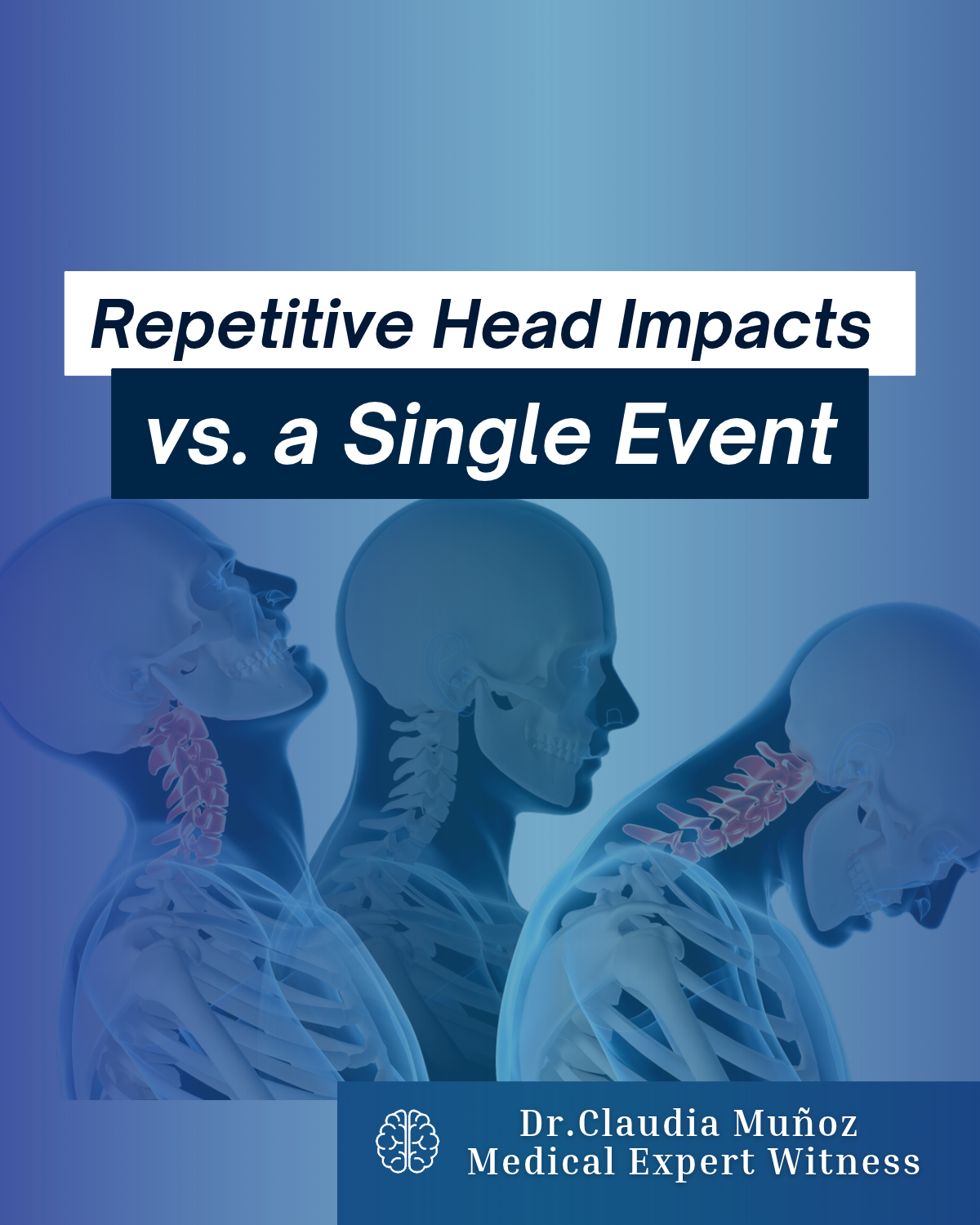
Chronic traumatic encephalopathy (CTE) is a progressive brain disease linked to repetitive head impacts from contact sports such as football, military combat exposure, intimate partner violence, and other sources. In a legal setting, one question comes up repeatedly: did the injury come from one identifiable event, or from cumulative exposure?
What Counts as a Repetitive Head Impact
Repeated head impacts are not only concussions. They include hits that lead to a concussion and hits that cause no symptoms at all. A person can sustain many impacts over years without a single event that was ever diagnosed or even noticed.
Exposure May Matter More Than Any Single Hit
Current research suggests CTE risk is related to the number and severity of head impacts sustained over a lifetime. This is different from asking whether one particular injury caused harm. A single concussion is not the same as CTE, and there is no strong evidence that one or more concussions, or occasional hits to the head, lead to CTE.
It Is Not Only an Athlete's Issue
CTE has been diagnosed in non-athletes exposed to repetitive head impacts, including military veterans and victims of interpersonal violence. Why some people with long-term exposure develop it and others do not remains an open research question.
Diagnosis Has Limits
A CTE diagnosis can only be confirmed by examining the brain after death.
In living people, doctors assess symptoms such as mood changes, memory problems, and behavior changes. These do not by themselves establish CTE.
Early blood-marker research is promising but cannot reliably identify early-stage CTE. Abnormal tau appears in several overlapping brain diseases, especially in older adults, and more research is needed.
What a Neurologist Looks At
The exposure history: sport, years played, position, combat exposure, or history of violence.
The documented events: any diagnosed concussions, with dates and treatment.
The symptom timeline: when symptoms began and how they progressed.
Other explanations: sleep disorders, depression, medications, substance use, vascular disease, and other neurodegenerative conditions.
Testing and imaging: what has been done, what it showed, and what it cannot show.
What This Means for Case Evaluation
A single documented event and cumulative exposure call for different questions. The records should show which one is being claimed.
For repeated-exposure claims, the history of exposure is central evidence, and it is often poorly documented.
Symptoms such as mood changes and memory loss do not by themselves establish CTE. Other conditions can look similar.
Population-level research describes groups, not individuals. A neurologist can help separate what the research supports in general from what the records support for one person.
Each case depends on its specific facts and medical history. This article summarizes general information, not an opinion on any specific case.
Work With a Neurologist Expert Witness
If your case involves repeated head impacts or a single injury with long-term symptoms, I can help review the records, the exposure history, and the medical issues of causation in a clear, objective way.
📩 doctor.claudia@gmail.com | info@drclaudiamunoz.com
Dr. Claudia Muñoz, MD, MPH Neurologist | Epileptologist | Medical Expert Witness
#TraumaticBrainInjury #TBI #CTE #RepetitiveHeadImpacts #MedicalExpertWitness #NeurologistExpertWitness
