
By Dr. Claudia Muñoz, MD, MPH — Board-Certified Neurologist & Epileptologist, Medical Expert Witness
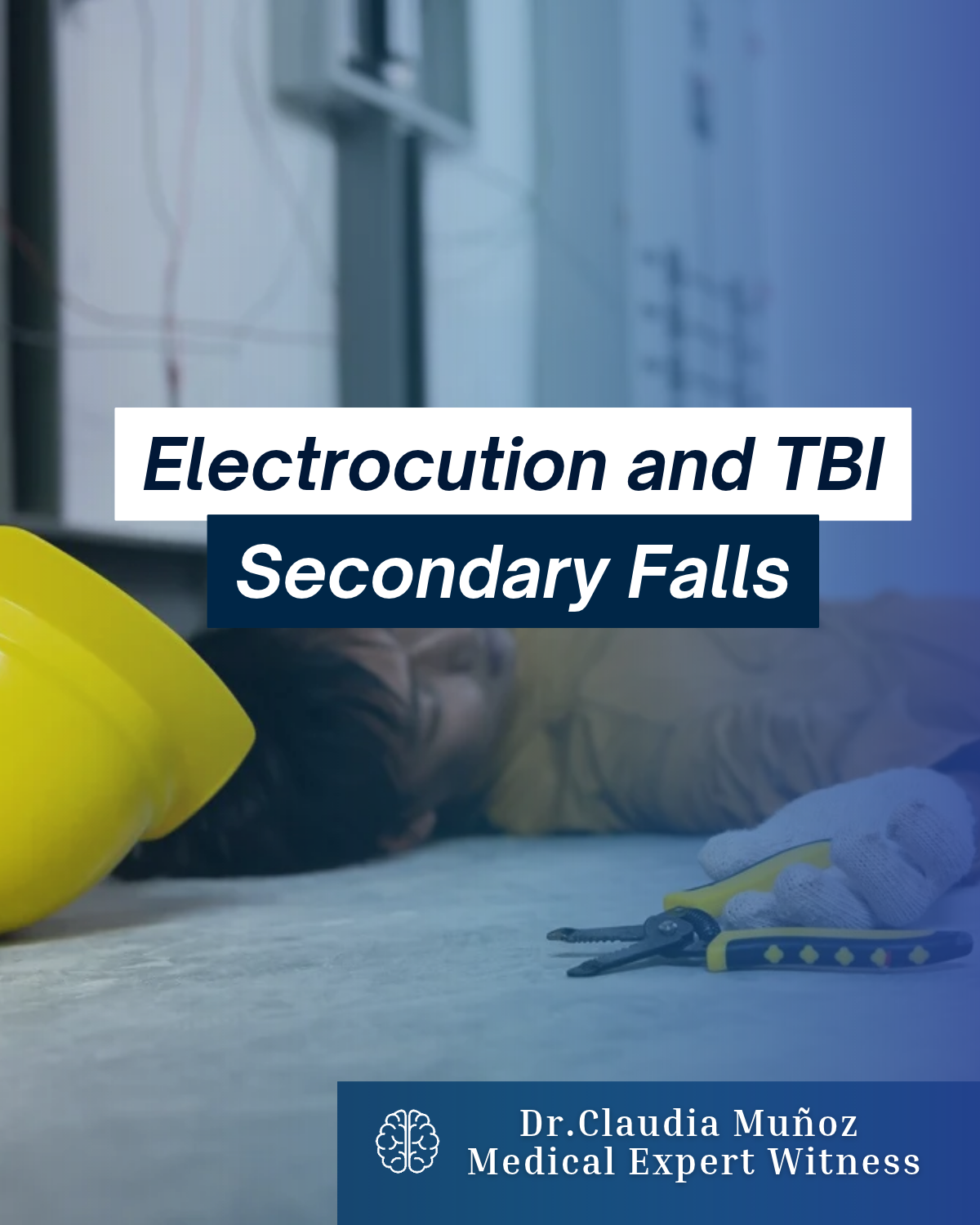
When a person is injured by electricity, attention naturally goes to the shock itself: the burns, the heart, the nervous system. But in many cases the brain is injured by something else, the fall that follows. The violent, involuntary muscle contractions caused by a shock can throw a person or cause them to fall, leading to blunt-force head trauma, skull fractures, or intracranial hemorrhage.
This article explains how secondary falls happen, why they are easy to miss, and what they mean for case evaluation.
Two Mechanisms in One Event
An electrical injury can harm the body in several ways, and they do not need to occur together:
The electrical injury itself, from current passing through the body
Thermal injury, from the heat the current produces
Mechanical injury, from a fall or a muscle contraction
A traumatic brain injury (TBI) from a secondary fall belongs to the third group. It is a blunt-force injury, much like a TBI from a fall for any other reason, and it is evaluated that way.
How a Shock Leads to a Fall
Alternating current, the kind supplied by household outlets, can cause ongoing muscle contraction at the point of contact, often leaving the person unable to let go of the source. Severe shocks can trigger muscle contractions powerful enough to throw people to the ground. Even milder contractions can startle a person into a fall.
The setting matters. Falls from a ladder, a roof, or an elevated work platform add height to the force of the impact, which is why electrical injuries at work and on utility lines carry this risk.
What the Fall Can Cause
A secondary fall can produce the same range of injuries as any blunt head trauma:
Concussion and mild TBI, often with normal imaging
Skull fracture
Intracranial hemorrhage, such as subdural, epidural, or intraventricular bleeding
Other injuries from the same fall, including fractures and dislocations, which may be easy to miss at first
Separately, electrical current passing through the head can affect the brain directly. That is a different mechanism and is addressed on its own.
Why Secondary Falls Are Easy to Miss
No external burns does not mean no injury. Severity on the skin does not predict severity inside the body.
The shock draws the attention. In an emergency, the cardiac and burn assessment can come first, and a fall may be mentioned only briefly in the record.
Fractures and head injuries can be overlooked early. Other injuries from tetanic muscle contraction and falls are easily missed on initial assessment.
Unwitnessed events. When no one saw the fall, the mechanism is often reconstructed from the scene and the person's own account.
Overlapping symptoms. Headache, confusion, memory problems, and mood changes can come from the head strike, from the electrical injury, or both.
What a Neurologist Looks At
The mechanism. What happened, from what height, onto what surface, and whether the person was thrown.
Loss of consciousness or amnesia, and for how long.
Early records. First responder, emergency department, and imaging reports. A head CT is considered when there is altered mental status or head trauma from a fall.
The symptom timeline. When symptoms began and how they changed.
Other contributors. Prior head injuries, medical conditions, and medications.
Case Evaluation
Two mechanisms, one event. The electrical injury and the traumatic fall each need their own analysis, and the record should keep them separate.
The scene details matter. Height, surface, and whether the person was thrown shape the likely injury.
A normal scan does not settle the question. A mild TBI can occur with normal imaging, and an abnormal scan does not explain every symptom.
Early documentation carries weight. Consistency across emergency, imaging, and follow-up records supports a credible opinion, whichever side it serves.
Each case depends on its specific facts and medical history. This article summarizes general information, not an opinion on any specific case.
Neurologist Expert Witness
If you are handling a case where an electrical injury was followed by a fall or head strike, a thorough neurological review of the records, exam, and timeline can clarify what the evidence does and does not support.
I provide independent medical examinations, medical record review, expert report writing, and deposition and trial testimony for plaintiff and defense attorneys handling traumatic brain injury cases.
📩 doctor.claudia@gmail.com | info@drclaudiamunoz.com
Dr. Claudia Muñoz, MD, MPH
Neurologist | Epileptologist | Medical Expert Witness
