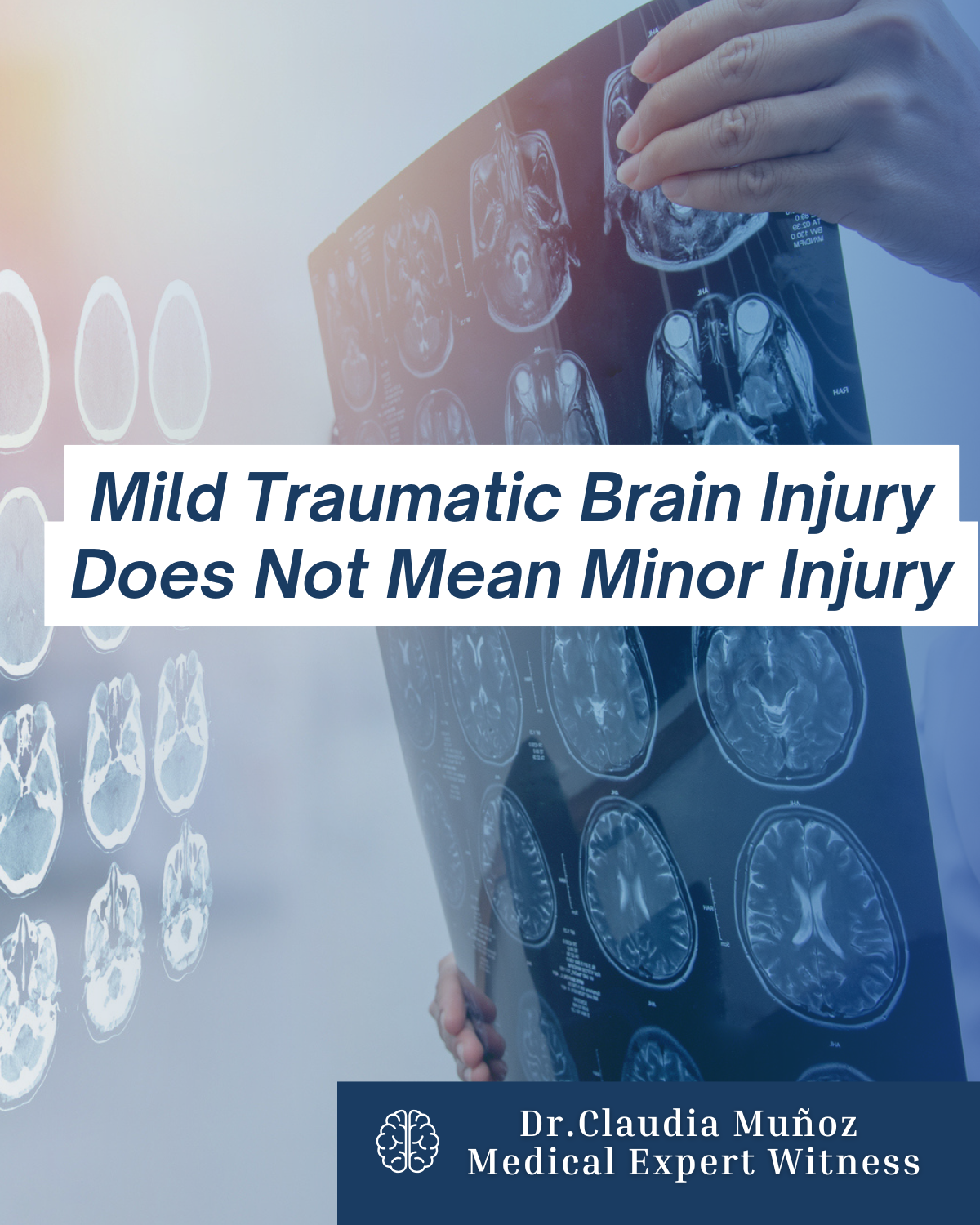
Mild Traumatic Brain Injury Does Not Mean Minor Injury
Make it stand out
Mild traumatic brain injury (mTBI) is one of the most frequently misunderstood conditions in both clinical and medico-legal settings.
The term “mild” refers to the initial presentation of the injury, not the severity of its long-term impact.
Patients diagnosed with mild TBI often present with:
Brief or no loss of consciousness
Normal CT or MRI finding
Limited external signs of trauma
These characteristics frequently lead to the assumption that the injury is minor or self-limited.
From a neurological perspective, this assumption is not supported by current medical understanding.
Many mild traumatic brain injuries involve microscopic and functional disruption of neural pathways, which are not detectable on routine imaging. These changes may significantly impair brain function.
As a result, patients may experience:
Cognitive slowing
Memory impairment
Difficulty with attention and concentration
Mental fatigue
Reduced processing speed
These symptoms may persist and interfere with daily functioning, work performance, and quality of life.
One of the key challenges in mTBI cases is the disconnect between imaging findings and clinical presentation.
Normal imaging does not exclude brain injury—it reflects the limitations of current diagnostic tools in detecting functional and cellular-level changes.
From a medico-legal perspective, this often leads to misinterpretation of injury severity.
Conversely, it is equally important to evaluate whether symptoms are consistent with the mechanism of injury and supported by clinical evidence.
Accurate assessment of mild TBI requires a structured approach that includes:
Analysis of the mechanism of injury
Evaluation of symptom progression over time
Correlation with established neurological principles
Consideration of alternative explanations
The diagnosis and severity of mTBI cannot be determined by a single factor.
It requires careful integration of clinical findings, scientific knowledge, and objective analysis.
As a neurologist and medical expert witness, my role is to provide evidence-based evaluation to clarify whether the clinical presentation is consistent with traumatic brain injury and to assess its functional impact.
📩 For case-specific neurological analysis, expert reports, or testimony, please contact:
doctor.claudia@gmail.com
info@drclaudiamunoz.com
Dr. Claudia
Neurologist | Medical Expert Witness
Traumatic Brain Injury & Neurological Cases
