
By Dr. Claudia Muñoz, MD, MPH — Board-Certified Neurologist & Epileptologist, Medical Expert Witness
A fall that seemed minor can lead to a slow bleed around the brain, and symptoms may not appear for weeks. A subdural hematoma is a type of traumatic brain injury (TBI), and it is easy to overlook for exactly that reason.
A Subdural Hematoma Is a TBI
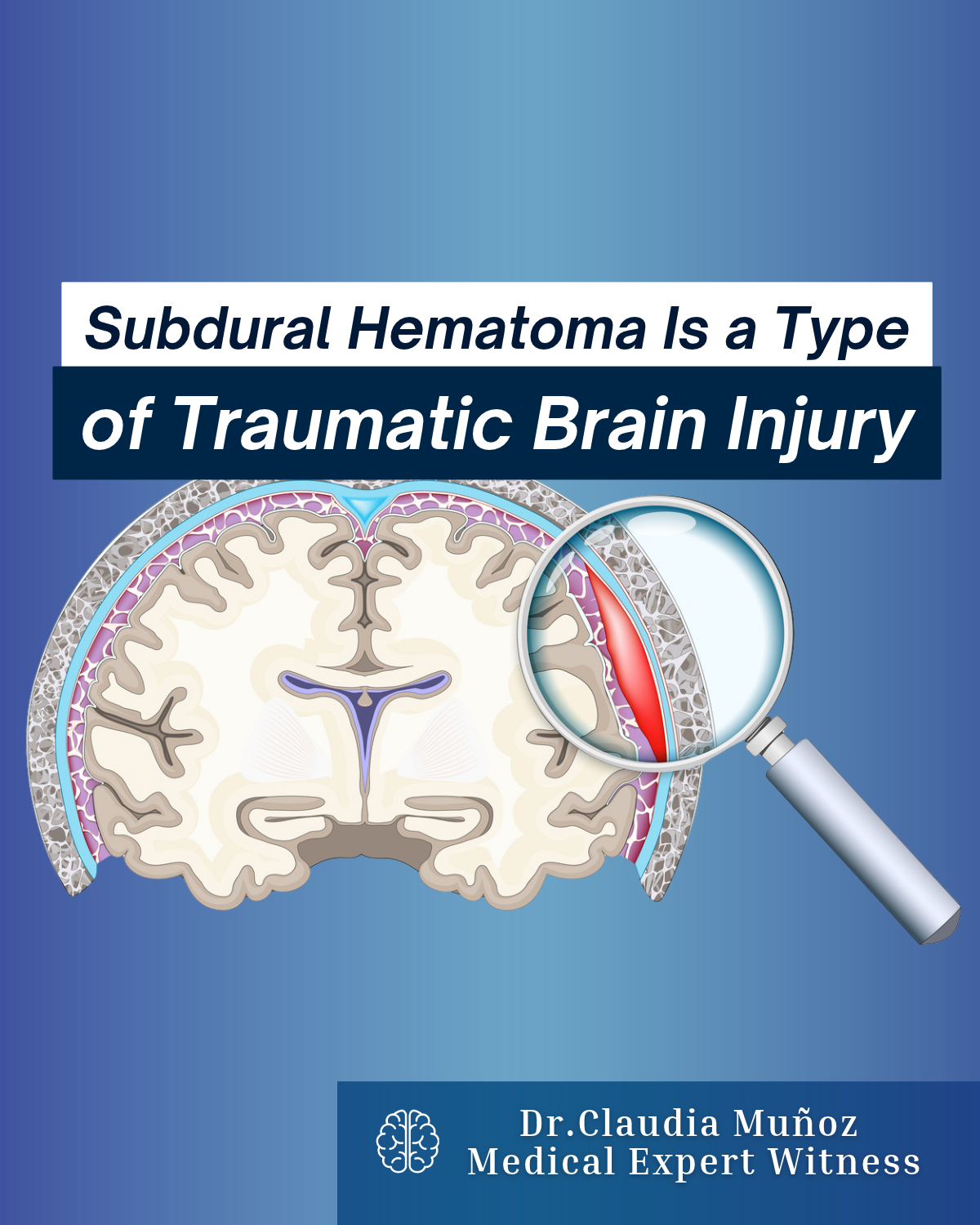
Cleveland Clinic describes a TBI as an outside force damaging the brain and affecting how it works. Falls are among the common causes. A subdural hematoma is a collection of blood between the surface of the brain and its outer covering. It usually results from head trauma that tears small veins in that space.
Why It Is Easy to Overlook
The trauma is often minor. Chronic bleeding can develop over weeks to months, and many patients cannot recall a head injury (Harvard Health).
Symptoms can be delayed. Cleveland Clinic notes that some TBI symptoms may surface days or even weeks later. Harvard Health adds that chronic subdural symptoms may continue for more than a month before the diagnosis is recognized.
Age changes the picture. In older adults, a ground-level fall can be enough, because age-related brain shrinkage stretches the bridging veins (StatPearls).
Medications raise the risk. Blood-thinning medications, including aspirin, clopidogrel, and anticoagulants, increase the risk of bleeding within the head (Harvard Health).
It can look like something else. In older adults, symptoms may be mistaken for dementia or stroke (Riverside Health System).
Symptoms Reported
Headache, confusion, memory problems, balance or walking difficulty, limb weakness, speech or vision changes, sleepiness, and seizures have all been described. Cleveland Clinic lists similar problems among TBI symptoms more broadly, including headaches, dizziness, confusion, memory problems, and sleep changes.
What a Neurologist Looks At
The mechanism: a documented fall, head strike, or other trauma, and when it happened.
The timeline: when symptoms first appeared and how they progressed.
Medications: anticoagulants, antiplatelets, and other bleeding risk factors.
Imaging: whether early scans were done, what they showed, and how findings changed over time.
Baseline status: prior cognition, gait, falls, and other conditions that could explain similar symptoms.
Case Evaluation
Whether a subdural bleed is a TBI turns on mechanism, timing, and records, not on how severe the original fall looked.
A documented fall or head strike supports a link. A missing one does not settle the question either way.
Prior falls, medications, and baseline cognition can all affect the analysis, in either direction.
Not every subdural collection is traumatic or recent, so other causes and earlier events should be considered.
Early imaging and the symptom timeline are often the most informative records.
Each case depends on its specific facts and medical history. This article summarizes general information, not an opinion on any specific case.
Neurologist Expert Witness
If your case involves a fall and a delayed brain bleed, I can help review the records, the timeline, and the medical issues of causation in a clear, objective way.
📩 doctor.claudia@gmail.com | info@drclaudiamunoz.com
Dr. Claudia Muñoz, MD, MPH Neurologist | Epileptologist | Medical Expert Witness
#TraumaticBrainInjury #TBI #SubduralHematoma #FallInjury #MedicalExpertWitness #NeurologistExpertWitness
