Severe Traumatic Brain Injury: Long-Term Neurological Consequences
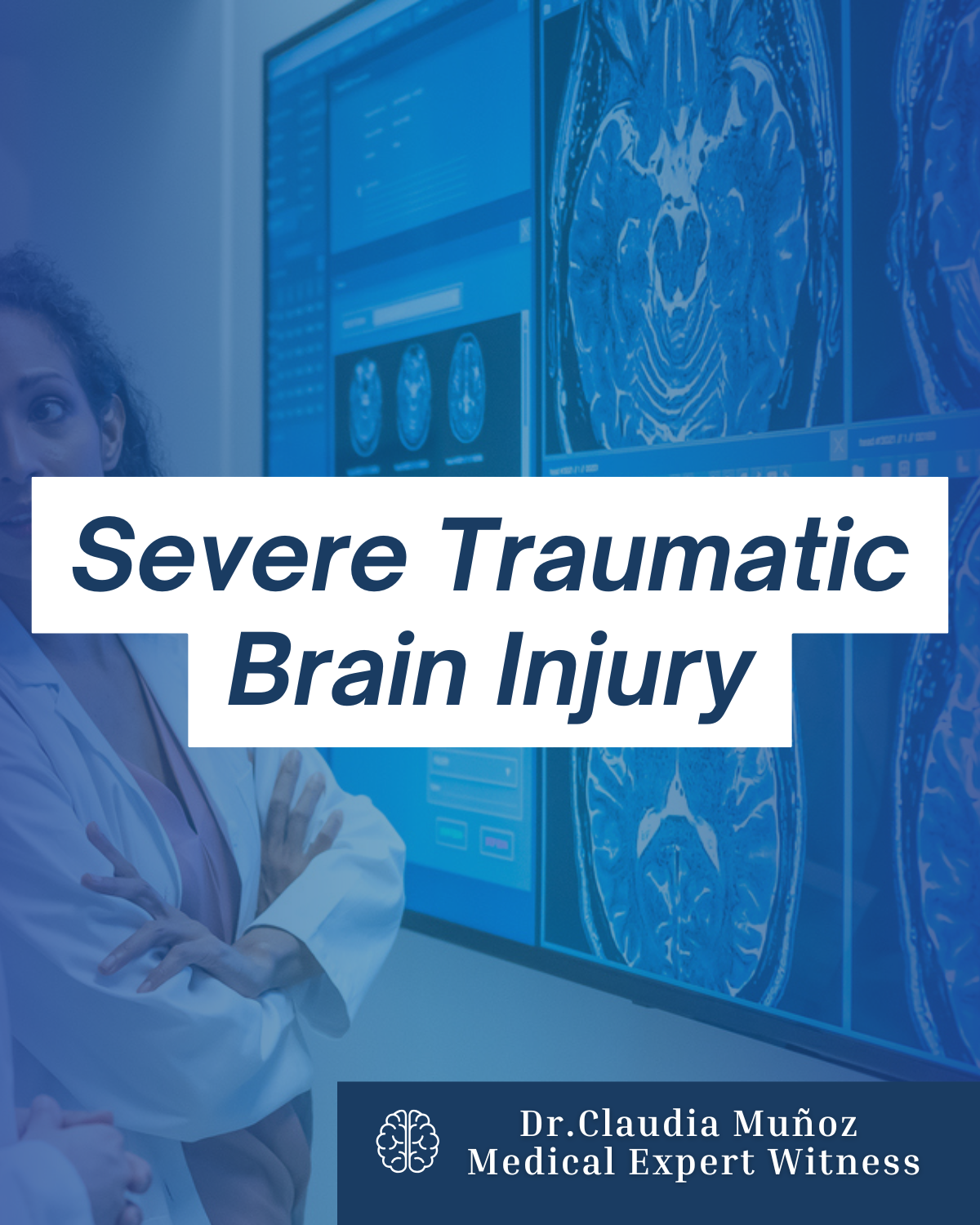
Severe traumatic brain injury (TBI) is commonly defined by initial clinical findings, including prolonged loss of consciousness, abnormal neuroimaging, and significant neurological impairment at presentation.
However, from a neurological and medico-legal perspective, the true impact of severe TBI extends far beyond the acute phase.
While early findings are critical for diagnosis, they do not fully capture the long-term neurological consequences that often determine a patient’s functional outcome and quality of life.
Severe TBI may result in widespread disruption of brain structure and function, including injury to cortical and subcortical networks responsible for cognition, behavior, and motor control.
Over time, patients may experience persistent deficits such as:
Impaired memory and learning
Reduced attention and processing speed
Executive dysfunction
Emotional and behavioral changes
Decreased independence in daily activities
These impairments are frequently multifactorial, reflecting both structural damage and ongoing alterations in neural connectivity.
Importantly, the severity of long-term impairment is not always predictable based solely on initial imaging or early clinical classification.
Recovery trajectories vary and are influenced by:
The mechanism and extent of injury
Secondary injury processes (e.g., inflammation, metabolic dysfunction)
Rehabilitation and medical management
Individual patient factors
From a medico-legal standpoint, this variability introduces significant challenges.
Assessment of severe TBI must move beyond initial diagnosis to include a longitudinal evaluation of neurological function and real-world impact.
Key considerations include:
Evolution of cognitive and functional deficits over time
Consistency of clinical findings with known neurological patterns
The degree of impairment in occupational and daily activities
Accurate interpretation requires an understanding that severe TBI is not a static condition, but a dynamic neurological process with long-term consequences.
As a neurologist and medical expert witness, my role is to provide objective, evidence-based analysis that integrates clinical findings, mechanism of injury, and functional outcomes to clarify the extent and impact of neurological impairment.
📩 For case-specific neurological analysis, expert reports, or testimony, please contact:
Dr. Claudia
Neurologist | Medical Expert Witness
Traumatic Brain Injury & Neurological Cases
