
Run-Over Bicycle Accidents: The Hidden Risk of Traumatic Brain Injury (TBI)
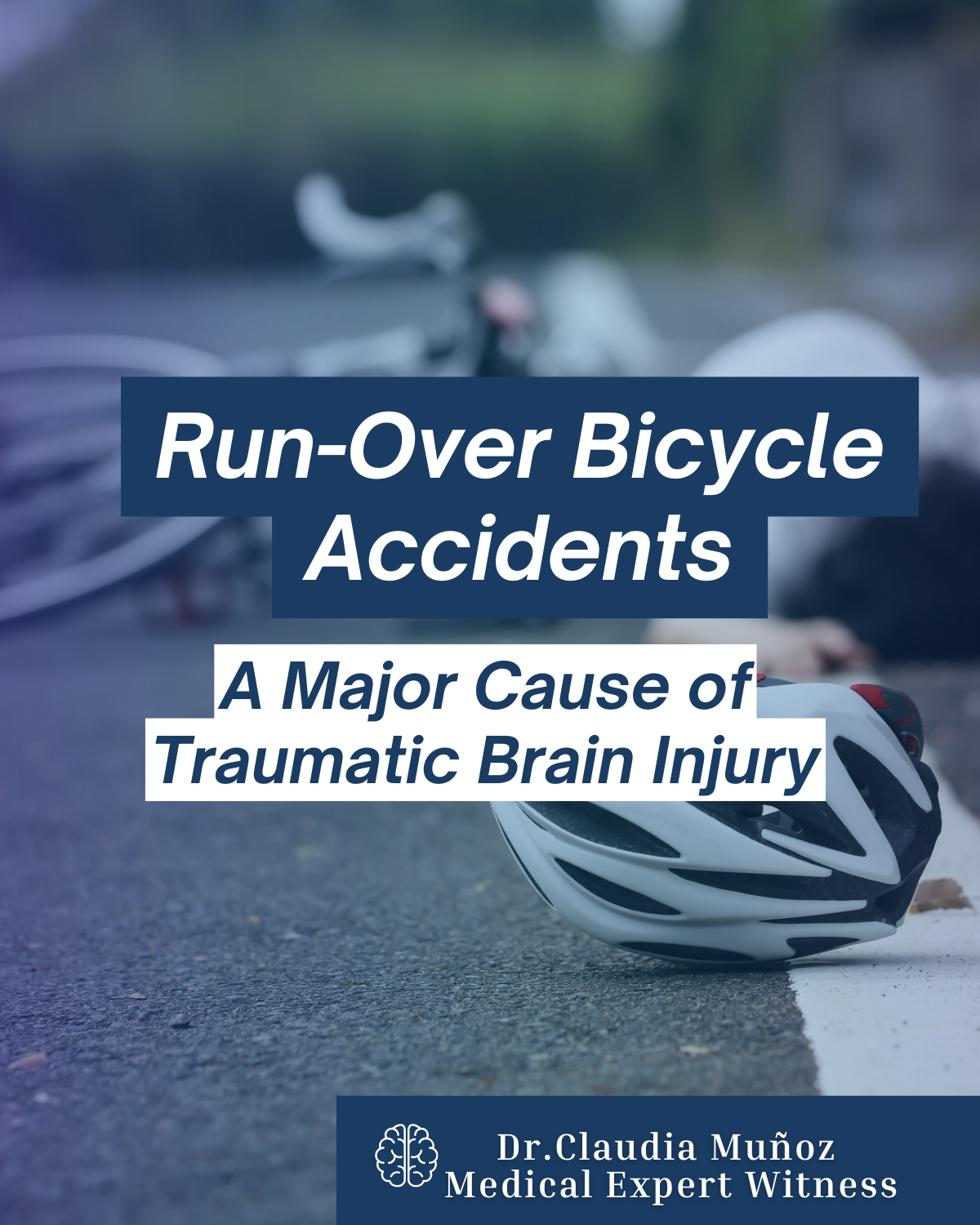
Bicycle riding continues to grow across the United States as a healthy, eco-friendly, and affordable mode of transportation. Yet with more cyclists on the road, the number of high-impact accidents—including run-over incidents—has also increased. When a cyclist is hit or run over by a vehicle, the effects on the brain can be severe, even if the person appears “okay” at first.
As a neurologist, I frequently evaluate patients whose symptoms after a bicycle collision were underestimated or missed entirely during initial medical care. These cases highlight a critical truth: run-over bicycle accidents are a major cause of Traumatic Brain Injury (TBI).
Why Run-Over Bicycle Accidents Are Neurologically Dangerous
When a cyclist is struck or run over, the body can experience an abrupt deceleration or violent rotational force. These forces can injure the brain in several ways:
1. Concussion Without Direct Head Impact
A TBI does not require a blow to the skull. The rapid movement of the brain inside the skull can cause neuronal stretching, chemical disruption, and temporary functional impairment.
2. Diffuse Axonal Injury (DAI)
In high-energy accidents—especially when a vehicle runs over the cyclist—shearing forces can tear or damage axons (the brain’s communication fibers).
DAI is one of the most serious forms of TBI and may not be immediately visible on standard imaging.
3.Intracranial Bleeding
Subdural hematomas, epidural hematomas, and brain contusions can develop hours after the collision, leading to swelling, increased intracranial pressure, and potentially life-threatening complications.
4. Secondary Effects: Hypoxia, Shock, and Systemic Trauma
Severe multi-system trauma (common in run-over injuries) further increases the risk of brain cell damage due to low oxygen levels or reduced blood flow.
Symptoms of TBI After a Run-Over Bicycle Accident
One of the biggest challenges in these cases is that symptoms may appear late, sometimes 24–72 hours after the accident. Warning signs include:
Persistent or worsening headaches
Dizziness or balance problems
Nausea or vomiting
Confusion or disorientation
Memory and concentration difficulties
Mood changes (irritability, anxiety, depression)
Sleep disturbances
Blurred vision or light sensitivity
Even “mild” symptoms can indicate a significant brain injury.
Prompt neurological assessment helps:
✔ Detect hidden intracranial bleeding
A CT or MRI may reveal injuries not visible externally.
✔ Document injuries for long-term care
In run-over cases, medical records play an essential role in rehabilitation, insurance decisions, and legal outcomes.
✔ Prevent long-term deficits
Early intervention can reduce the risk of chronic headaches, cognitive decline, sleep issues, emotional dysregulation, and post-concussion syndrome.
As a Medical Expert Witness reviewing run-over bicycle accident cases, I consistently observe:
Injuries initially labeled as “mild” that later reveal significant cognitive or emotional impairments
Symptoms were dismissed because the cyclist did not lose consciousness
Delays in obtaining neuroimaging
Lack of follow-up neurological evaluations after discharge
Long-term life impact is underestimated by insurers or legal teams
These cases require careful, evidence-based neurological interpretation to ensure the full extent of the injury is understood.
Connect for Expert Support
If you handle personal injury or defense cases, I offer neurological evaluations, expert testimony, and case reviews grounded in medical accuracy and clarity.
📩 For inquiries or consultations: doctor.claudia@gmail.com
Dr. Claudia Muñoz, MD, MPH
Neurologist | Medical Expert Witness
