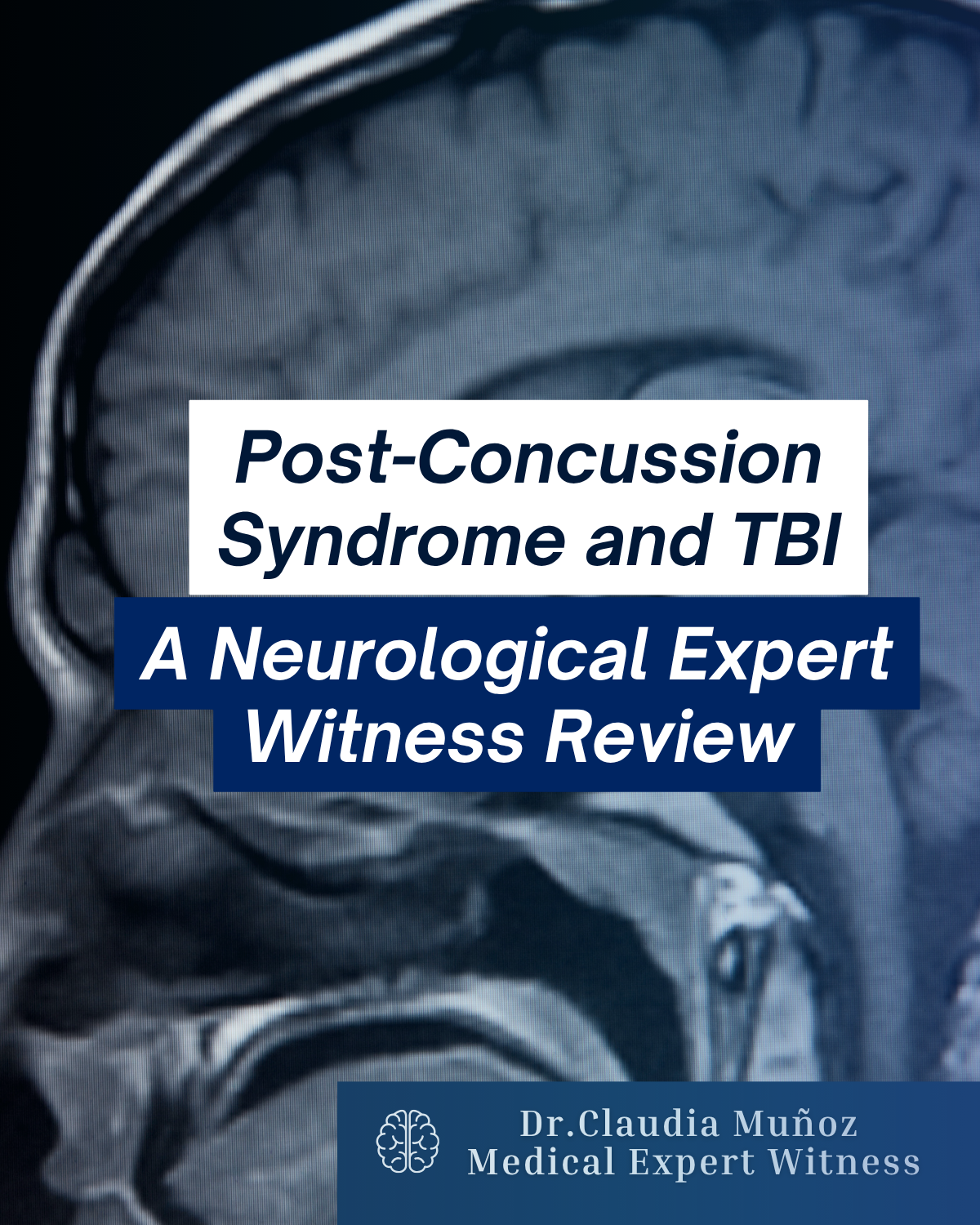
Post-Concussion Syndrome and TBI: A Neurological Expert Witness Review
By Dr. Claudia Munoz, MD, MPH — Board-Certified Neurologist & Epileptologist, Medical Expert Witness
Concussions are often treated as minor, self-resolving injuries. For most patients, that's true. But some go on to develop post-concussion syndrome — persistent symptoms that extend well beyond the expected recovery window and can meaningfully affect cognition and daily function.
"Concussion" Doesn't Always Mean Minor
Clinically, a concussion is a form of mild traumatic brain injury — but "mild" describes the initial presentation, not the eventual outcome. Some patients recover in days. Others develop lasting symptoms that meet the clinical definition of post-concussion syndrome, regardless of how minor the injury first appeared.
What Post-Concussion Syndrome Looks Like
It's a recognized clinical diagnosis, not an exaggerated complaint. Common symptoms include:
Persistent headaches
Memory and concentration difficulties
Dizziness and balance problems
Sensitivity to light and noise
Sleep disturbances
Mood changes
What sets it apart from typical concussion recovery is duration — symptoms lasting weeks to months, sometimes longer.
What a Neurological Review Looks At
Mechanism of injury: Do symptoms align with the type and severity of impact described?
Timeline: Are symptoms resolving, persisting, or worsening?
Clinical findings: Cognitive, physical, and emotional impact — not just imaging.
Pre-existing conditions: Prior injuries or psychiatric history need to be distinguished from the current injury.
Why Normal Imaging Doesn't End the Analysis
A normal CT or MRI does not rule out post-concussion syndrome. The injury is largely functional, not structural — which is why a full neurological and neuropsychological evaluation matters more than imaging alone.
What This Means for Your Case
"Concussion" describes the initial injury, not the outcome.
Duration and progression matter more than the initial diagnosis.
A normal scan isn't disqualifying, but claims still need well-documented clinical findings.
Each case depends on its specific facts. This article outlines general patterns, not an opinion on any specific case.
Work With a Medical Expert Witness
I provide independent medical examinations, medical record review, expert report writing, and deposition and trial testimony for plaintiff and defense attorneys handling concussion, post-concussion syndrome, and TBI cases.
📩 doctor.claudia@gmail.com | info@drclaudiamunoz.com
Dr. Claudia Munoz, MD, MPH, Neurologist | Epileptologist | Medical Expert Witness
#TraumaticBrainInjury #Concussion #PostConcussionSyndrome #MedicalExpertWitness #ForensicNeurology #LitigationSupport
